Why Traders Should Learn to Short: Markets Move Both Ways
Markets rise, fall, and range. A trader who only understands long setups ignores a large part of market behavior.
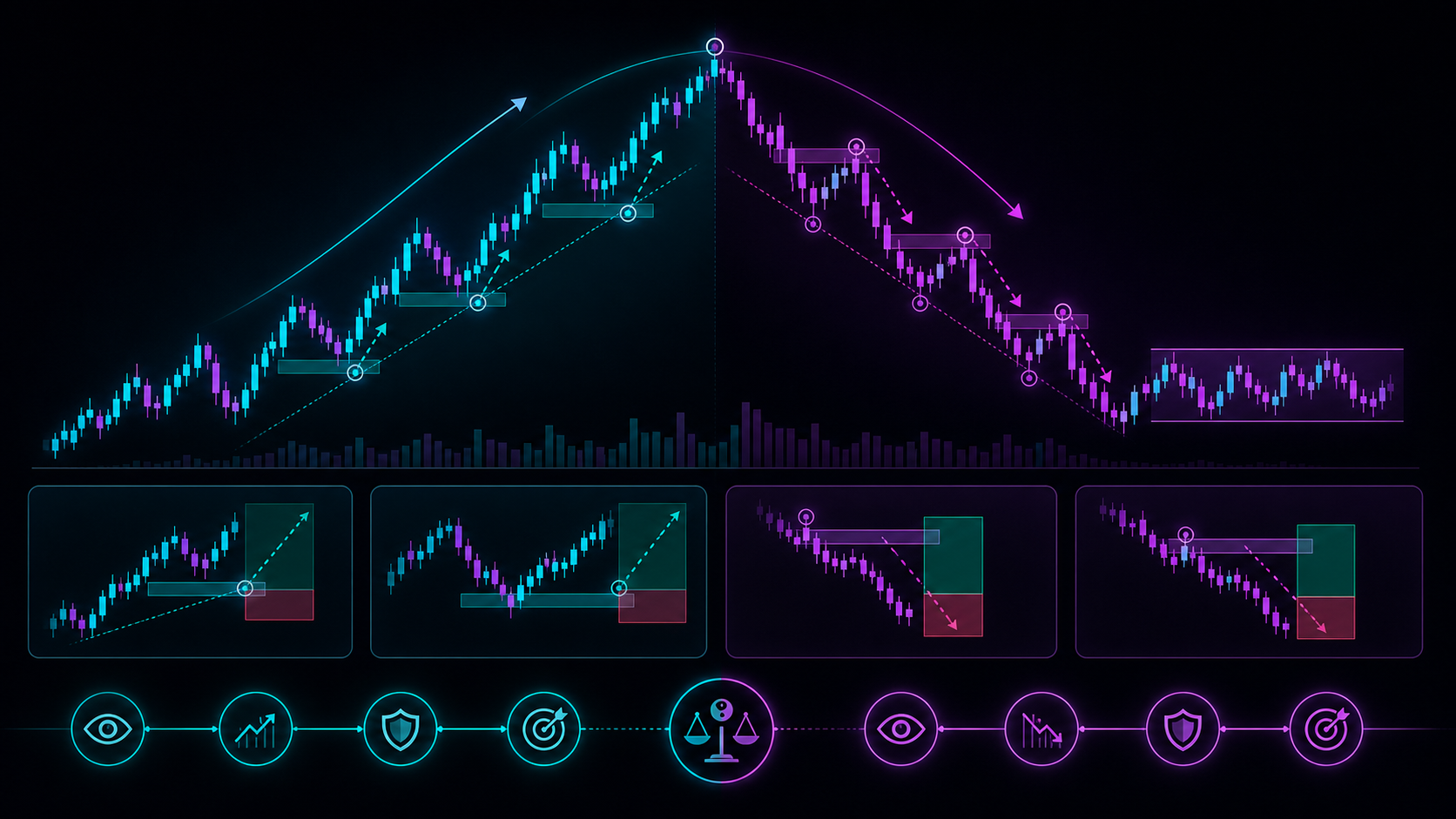
Learning to short removes automatic bullish bias and allows a strategy to participate in confirmed downtrends. The edge comes from applying tested rules in both directions, not from shorting every decline.
Many traders begin with a natural long bias. Buying feels intuitive. Investing culture teaches ownership. Green candles feel like opportunity, and red candles feel like discounts.
That mindset can be useful for long-term investing, but it can hurt an active trader. When market structure turns bearish, a long-only trader may keep treating every decline as a bargain. They buy the first dip, then the second, then the third, while the market is no longer rewarding that behavior.
Learning to short does not mean becoming bearish all the time. It means learning to respect the fact that the market moves in two directions.
What Shorting Adds
Shorting can make a trader more objective. Instead of asking only, "Where can I buy?", the trader learns to ask, "Which direction does the current condition support?"
That shift matters. A confirmed downtrend can offer the same kind of structured opportunity as a confirmed uptrend: trend, pullback, location, trigger, invalidation, and target. The direction changes, but the discipline does not.
Shorting also helps you understand market mechanics. Liquidations, short squeezes, funding, borrow costs, and crowded positioning all become easier to interpret when you understand both sides of the trade.
Start With Trend-Aligned Shorts
The cleanest educational starting point is not "price looks high." It is a confirmed bearish structure.
Look for lower highs, lower lows, failed recoveries into resistance, bearish momentum that is stronger than bullish pullbacks, and enough space before major support. Most importantly, define invalidation above meaningful structure. If price reclaims that area, the short idea is wrong.
Avenger can help identify trend direction without treating every red candle as a short signal. Crypto Trend can help you avoid fighting broad market context.
Why Shorts Feel Different
Down moves can be fast because risk reduction happens urgently. Leveraged longs may be forced out. Liquidity may thin. Fear can create sharper movement than optimism.
But the same speed can appear against short sellers. A crowded short can squeeze violently when traders cover or are liquidated. That is why shorting requires especially clear invalidation and disciplined sizing.
The worst short is often the emotional one: a trader misses a long move, feels the market is "too high," and shorts only because they want the move to reverse. That is not a bearish setup. That is frustration.
Practice Both Directions
Paper trade one bearish setup first. Use the same seriousness you would use for a long setup: context, entry trigger, invalidation, stop, target, and screenshot review. Separate long and short trades in your trading journal so you can see whether your bearish execution is actually clean.
Shorting is not required in every strategy. But understanding it improves market awareness, even if you later choose to trade mostly long.
Continue Learning
- Review long and short mechanics.
- Learn trend trading.
- Study pullbacks vs reversals.
- Practice trend-following setup workflows in both directions.
Practice Both Directions With ZenAlgo
Use the ZenAlgo trial to review historical bullish and bearish Avenger conditions. Build separate screenshots of valid long and short setups before placing any live trade.
Shorting can create rapid or theoretically unlimited losses depending on the product. Practice first and define risk before entry.