Liquidity Explained
Liquidity describes how easily a market can absorb buying and selling without a large price impact.
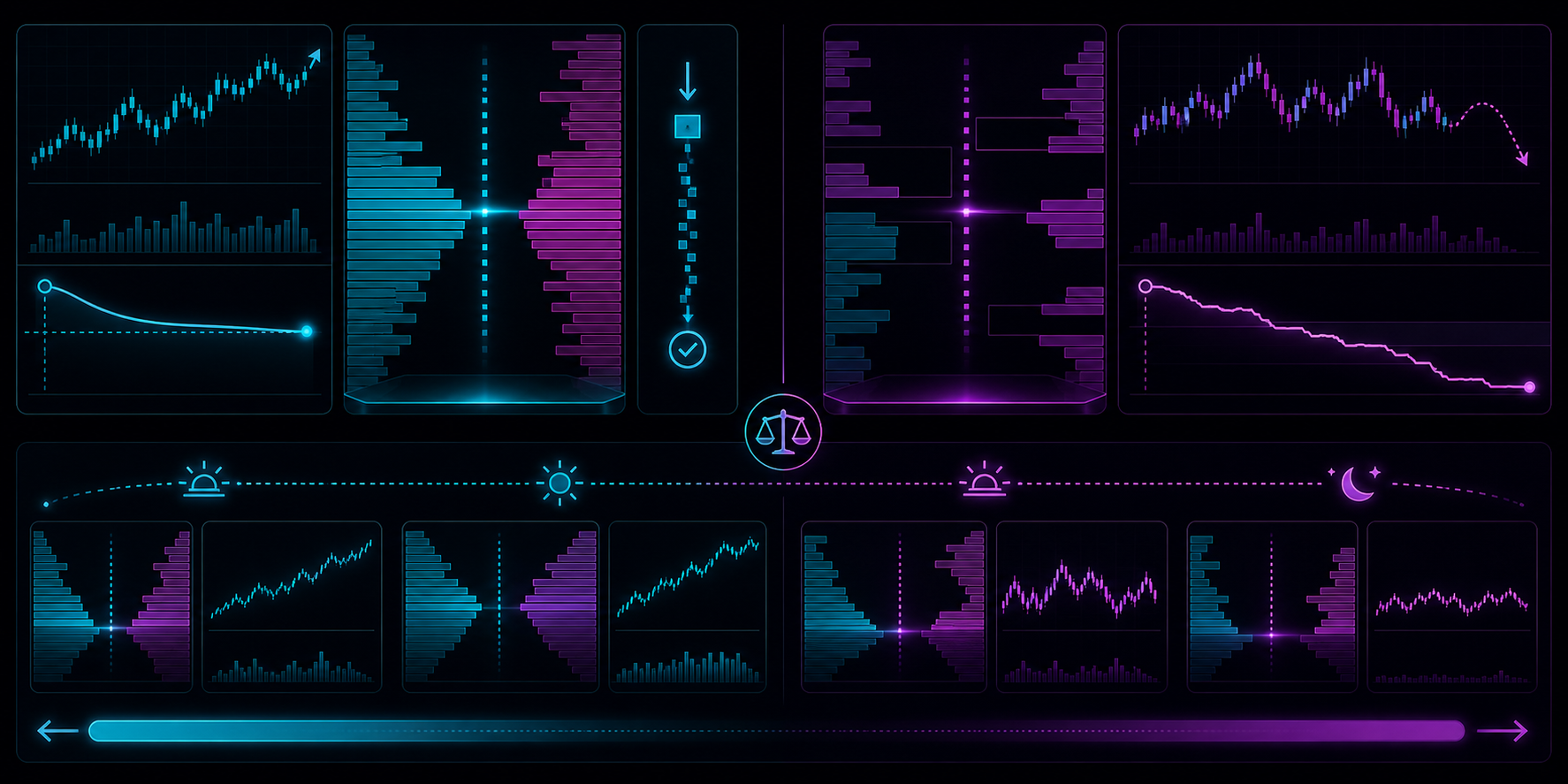
A liquid market has enough active buyers and sellers to execute meaningful orders with tight spreads and limited price impact. An illiquid market has wider spreads, thinner depth, and greater slippage.
Liquidity Has Several Dimensions
Tightness
How narrow is the bid-ask spread?
Depth
How much volume is available near the current price?
Resilience
How quickly does the order book recover after a large trade?
Activity
How consistently do trades and new orders arrive?
A market can look active while still having poor depth for a large position.
Visible and Hidden Liquidity
The visible order book shows resting orders, but it is incomplete.
Liquidity may also come from:
- hidden or iceberg orders;
- market makers updating quotes;
- conditional stop orders;
- traders responding after price moves;
- related venues and arbitrage.
Visible orders can also be canceled before execution. Do not treat every displayed order as guaranteed support or resistance.
How Liquidity Affects Price
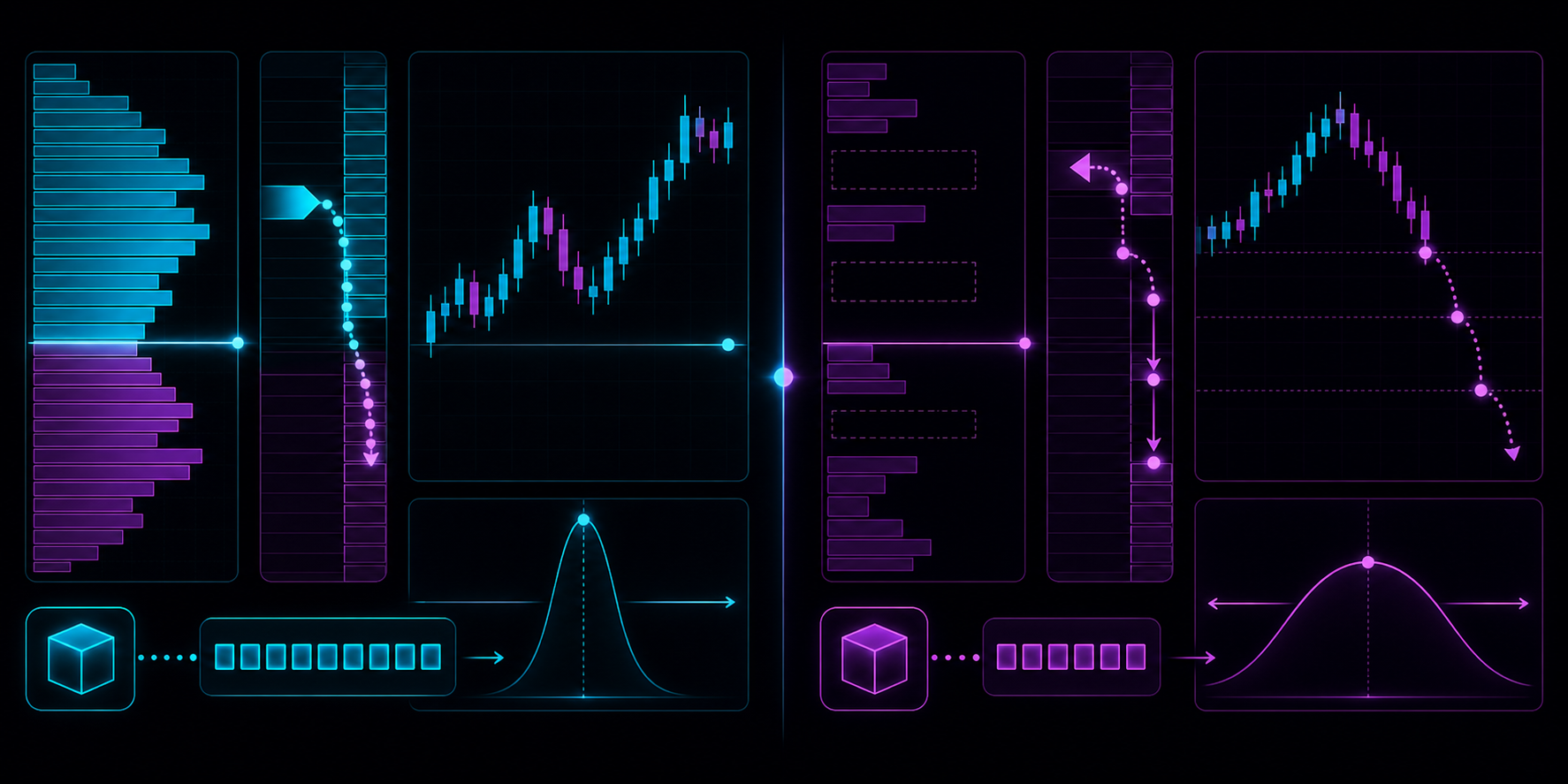
Price moves when aggressive orders consume available resting liquidity and reach for the next price.
In deep liquidity:
- spread is often tighter;
- large orders create less impact;
- execution is more predictable.
In thin liquidity:
- small orders can move price;
- gaps and wicks are more common;
- stops can slip;
- apparent breakouts can reverse quickly.
Liquidity Changes Over Time
Liquidity varies by:
- trading session;
- day of week;
- market open and close;
- economic news;
- volatility;
- instrument popularity;
- venue health.
Sessions helps visualize how ranges, activity, and pressure change through global sessions. Ranger adds value and range context.
Liquidity Is Not Volume
Volume measures completed trading activity. Liquidity measures the market's capacity to execute orders efficiently.
A market may show high volume during panic while spreads widen and liquidity deteriorates. Conversely, a calm market may have deep resting liquidity but modest completed volume.
What Traders Mean by “Liquidity Areas”
Traders often use the phrase to describe areas where many orders may cluster, such as:
- above obvious swing highs;
- below obvious swing lows;
- around range boundaries;
- near round numbers;
- around session highs and lows.
These areas may attract price because triggering orders creates executable flow. Their existence and reaction are never guaranteed.
A Practical Liquidity Checklist
Before trading:
- Check the typical spread.
- Compare position size with available depth.
- Consider the active session.
- Avoid assuming visible orders will remain.
- Plan for slippage during stops and breakouts.
- Reduce size when conditions deteriorate.
Key Takeaways
- Liquidity is the capacity to trade without large price impact.
- Tight spread, depth, resilience, and activity all matter.
- Visible order-book liquidity can disappear.
- Volume and liquidity are related but different.
- Liquidity conditions directly affect execution and risk.
Continue Learning
- Review how financial markets work.
- Learn slippage, spread, and fees.
- Explore Sessions and Ranger.
Liquidity can disappear suddenly. Stops, limits, and historical spreads do not guarantee future execution quality.