Trend, Momentum, and Market Context
Good trades do not exist in isolation. A setup that makes sense in a trend may fail in a range, and a signal that matters during expansion may be noise during compression.
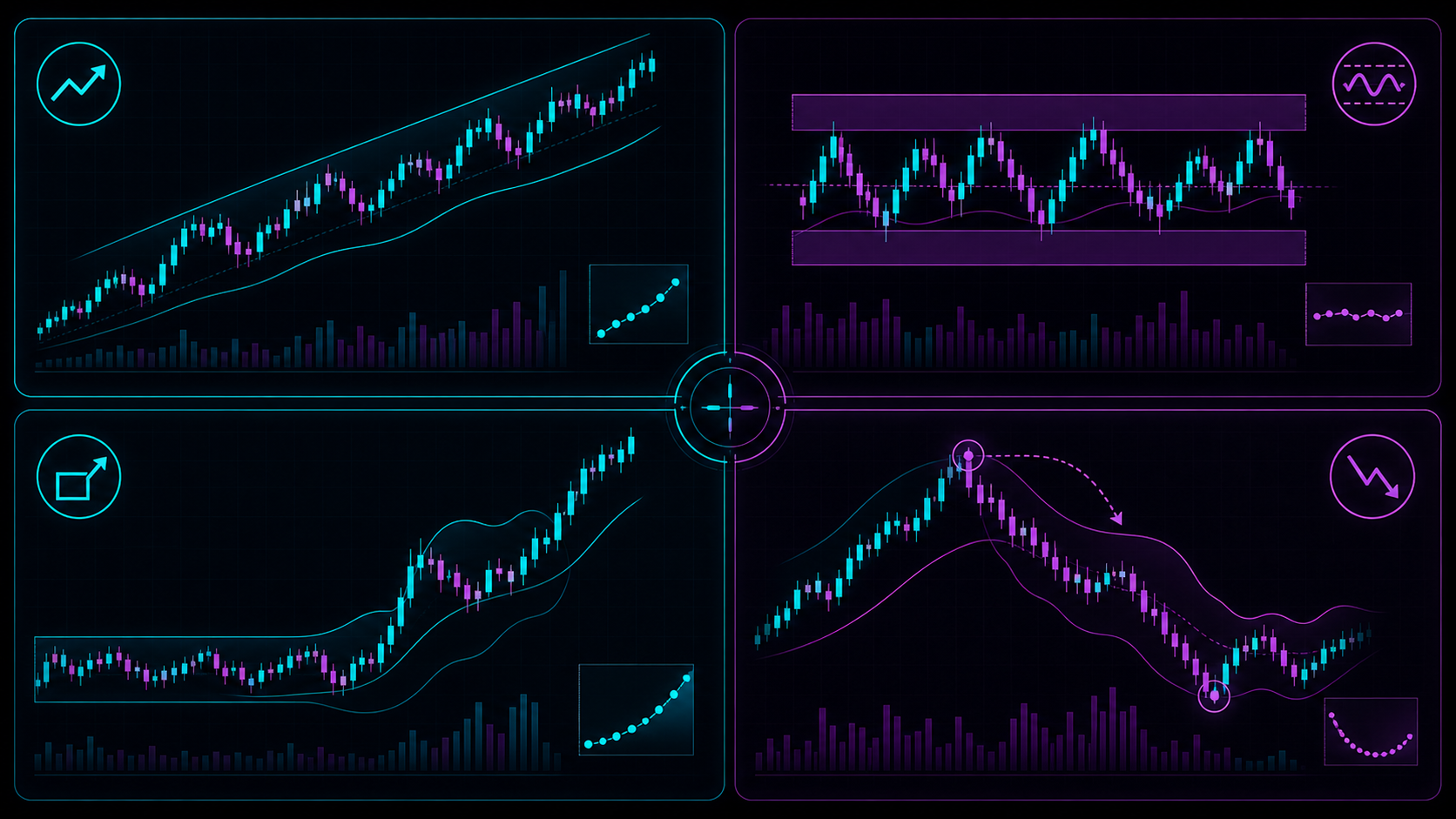
Use this section after learning chart structure and risk management. The goal is to classify the market before deciding whether a setup deserves attention.
Trend and Direction
- How to Identify a Market Trend
- Why Trading With the Trend Improves Your Odds
- Trend Strength vs Trend Direction
Momentum and Extremes
Market Context
- Market Regimes Explained
- Trend, Range, Breakout, and Reversal Conditions
- Multi-Timeframe Analysis
- How Trading Sessions Affect Price
- Volatility Expansion and Compression
What You Should Be Able to Do Afterwards
- distinguish trend direction from trend strength;
- identify when momentum confirms or weakens a move;
- treat overbought and oversold as context, not automatic reversal signals;
- classify trend, range, breakout, reversal, and transition conditions;
- align higher-timeframe context with lower-timeframe execution;
- understand why sessions and volatility change setup quality.
Practice With ZenAlgo
Use Avenger for trend context, ADX for strength, Waves or Q for momentum, Sessions for time-of-day context, and Squeeze for compression and expansion.
Continue with Volume, Order Flow, and Value to learn whether participation and value support the market context you identified. When you begin journaling, tag trades by setup and market regime so you can see which conditions actually fit your strategy.
Market context improves filtering but cannot predict outcomes. Always combine context with defined invalidation and position sizing.