Trading Psychology and Performance
Most traders do not burn out because they never found an indicator. They burn out because the market eventually finds the weak spot in their behavior.
At first, trading looks like a chart problem. You learn candles, trends, setups, volume, risk, and indicators. Then you discover the harder part: you can know the correct action and still not take it. You can have a stop and still move it. You can write a rule and still break it after one painful loss. You can promise yourself patience in the morning and chase a candle in the afternoon.
That is why trading psychology is not a motivational extra. It is part of the trading system.
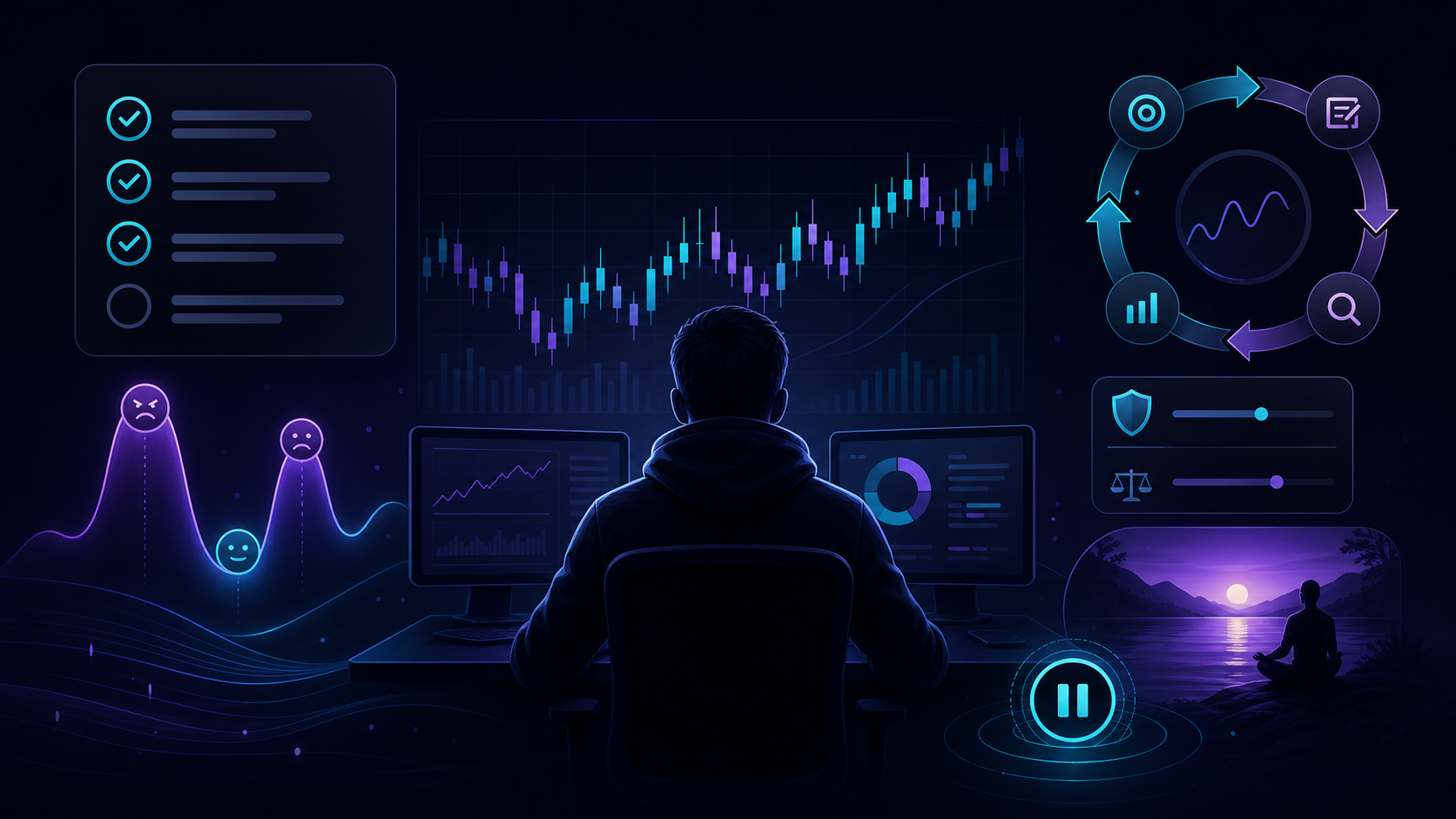
Your job is not to feel nothing. Your job is to notice emotion early enough that it does not become an unplanned trade.
Think of this section as the part of the wiki that sits beside the chart, not under it. The articles here are about the moments when the trade is technically clear, but the human is not. The moment after a stop loss. The moment after three wins. The moment when price runs without you. The moment when you are tired, annoyed, and still staring at a five-minute chart trying to invent one more setup.
Good psychology does not make you fearless. It makes you harder to push around.
Discipline and Process
Start here if you often know what you "should" do, but struggle to do it consistently.
- Trading Discipline Explained
- Why PnL Is Not the Only Trading Metric
- A Well-Executed Losing Trade Is Still a Good Trade
Emotional Risk
This is where most accounts get damaged: not by one normal loss, but by the behavior that follows it.
Bias and Performance Review
These articles help you review yourself without being fooled by the last trade, the last week, or your ego.
- Recency Bias and Strategy Hopping
- Outcome Bias in Trading
- How to Handle Losing Streaks
- How to Build Confidence Without Becoming Overconfident
- When Not to Trade
The Daily Reset Framework
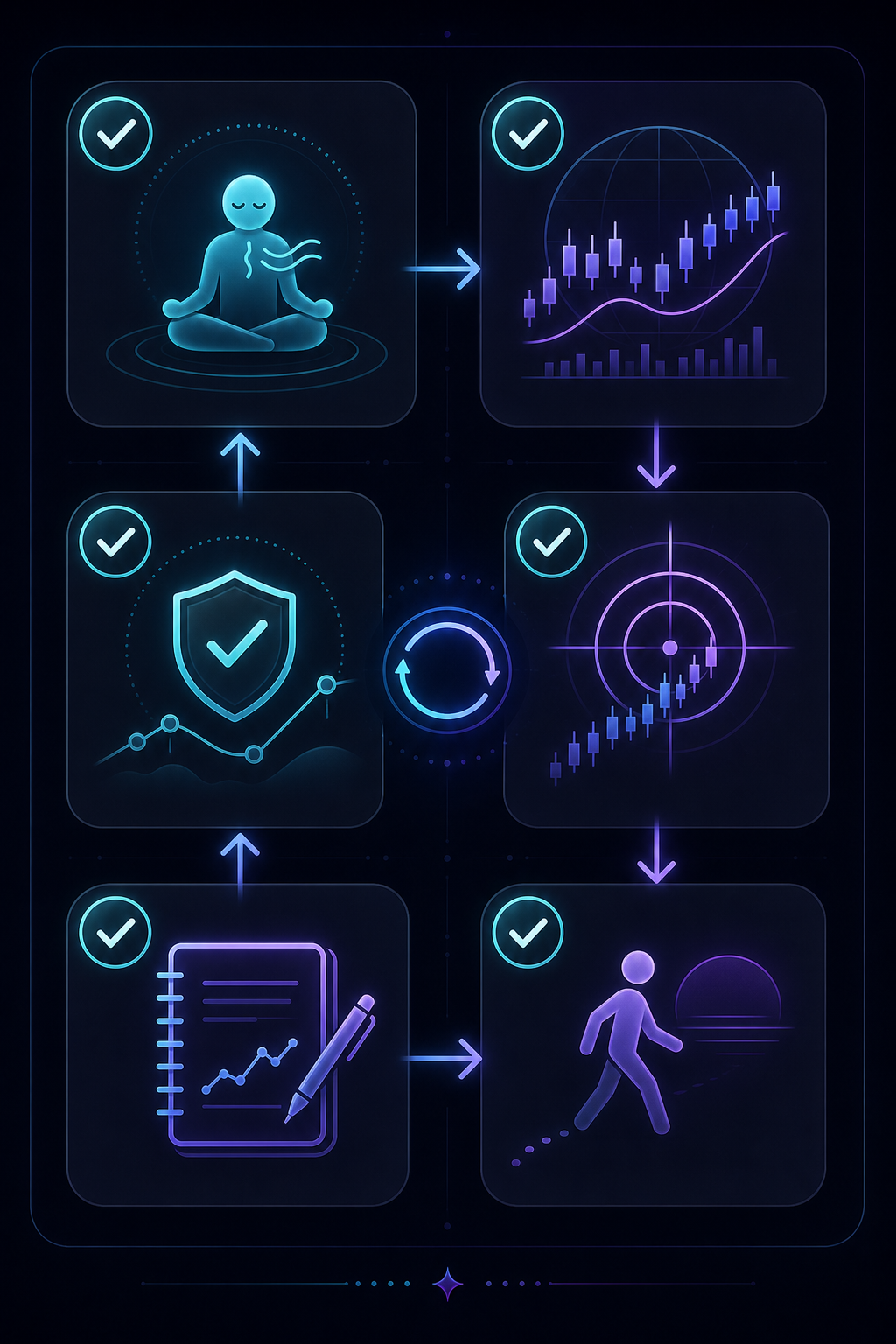
Before a session, the question is not only "Where is the market going?" A better question is: "Am I in a state where I can follow my own process?"
Use this reset as a short daily ritual. It should take less than two minutes, but it can prevent hours of messy trading.
First, check your state. Are you rested enough to make decisions, or are you already irritated, rushed, or desperate to win? Then check the market context. Is this the type of market your strategy is designed for, or are you forcing a system into conditions it does not handle well? Only after that should you check the setup, the risk, and the review plan.
If emotion is louder than the plan, the correct action is often not "analyze harder." It is to step away from the screen long enough for your nervous system to cool down. Trading from a calmer body is not soft advice. It is execution quality.
Practice With ZenAlgo
Use Engine readiness, Five Elements confluence, and Avenger trend/value context to reduce impulsive decisions. The tools help most when they are part of a written checklist, not when they become emotional permission to force trades.
The aim is simple: make it harder to lie to yourself in real time.
Continue with Journaling and Metrics to turn psychology, execution, and trade outcomes into evidence you can review.
Trading psychology does not remove financial risk. If trading causes severe stress, financial harm, or compulsive behavior, stop trading and seek appropriate support.