How to Create a Post-Trade Review
A post-trade review turns each trade into data. It helps separate good decisions from lucky outcomes and bad decisions from normal losses.
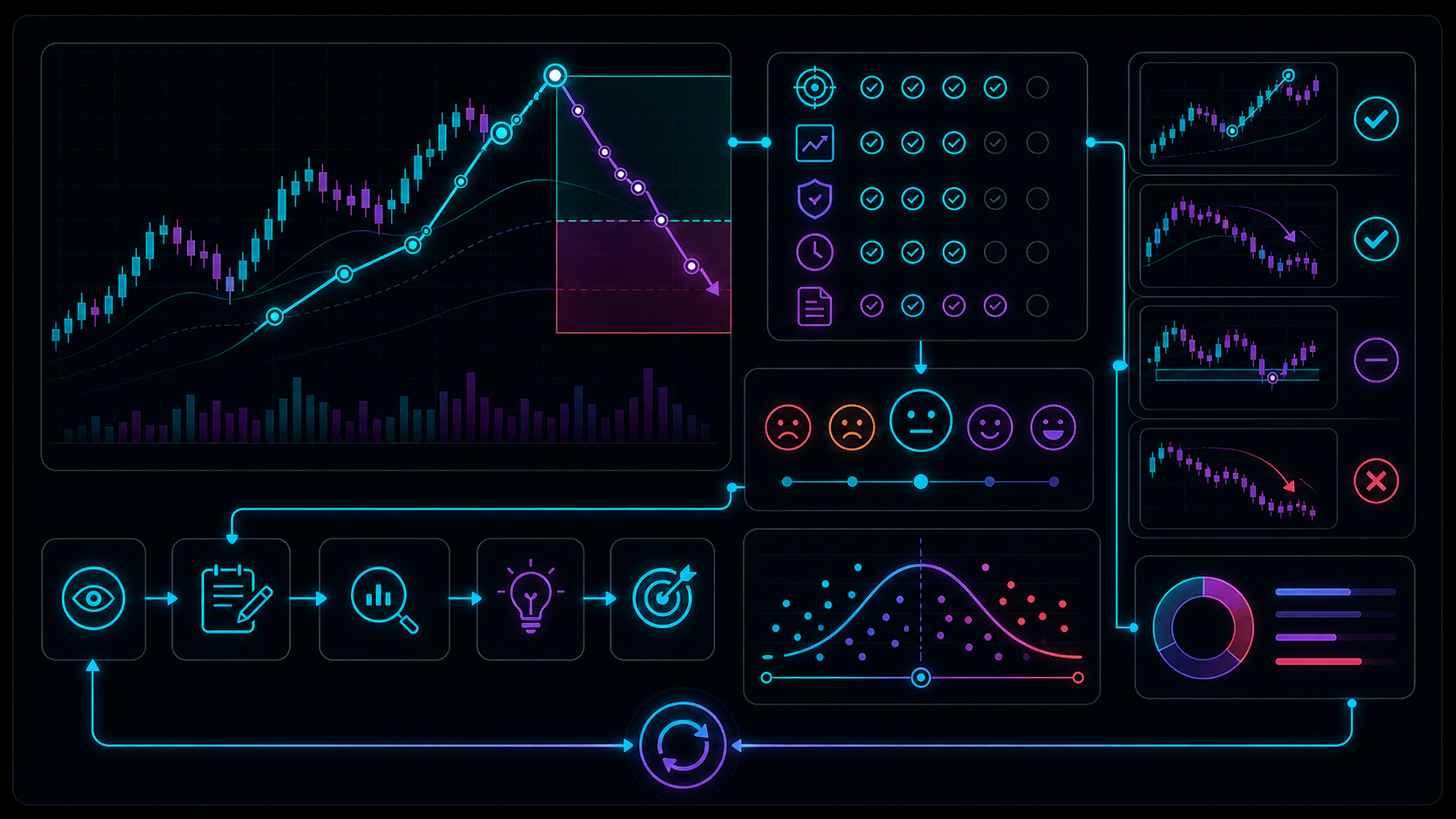
Review the process first. PnL matters over time, but short-term PnL can reward bad behavior and punish good behavior.
What to Record
Record:
- setup type;
- market regime;
- timeframe;
- indicators used;
- entry reason;
- invalidation;
- planned risk;
- actual risk;
- exit reason;
- screenshots before and after;
- rule adherence score;
- emotional state.
The Most Important Question
Ask:
Did this trade belong to my strategy and did I execute it correctly?
If yes, the trade belongs in the strategy sample even if it lost.
If no, the trade is process error data, not clean strategy evidence.
Process Categories
Classify each trade:
| Category | Meaning |
|---|---|
| A-trade | Rules followed, good setup, acceptable execution |
| B-trade | Mostly valid, minor issue |
| C-trade | Weak setup or poor execution |
| Rule violation | Trade should not count as clean strategy evidence |
Review Groups, Not Isolated Trades
Do not rewrite your strategy after one review.
Review groups:
- 20 similar trades;
- one week or month;
- one market regime;
- one setup type;
- one execution problem.
Patterns matter more than isolated discomfort.
Using ZenAlgo
Tag which ZenAlgo tools were part of the plan: Engine readiness, Five Elements confluence, Grid structure, ABC targets, or Channel regime.
Only compare trades that used the same rule set.
Continue Learning
- Study sample size and expectancy.
- Learn when to change a strategy.
- Review maximum drawdown.
Journaling improves review quality but cannot remove market risk or guarantee that past patterns continue.