How to Adapt a Strategy to Different Market Regimes
Market regime describes the environment a strategy is operating in. A setup that works in a trend may fail in a range, and a range tactic may get crushed during expansion.
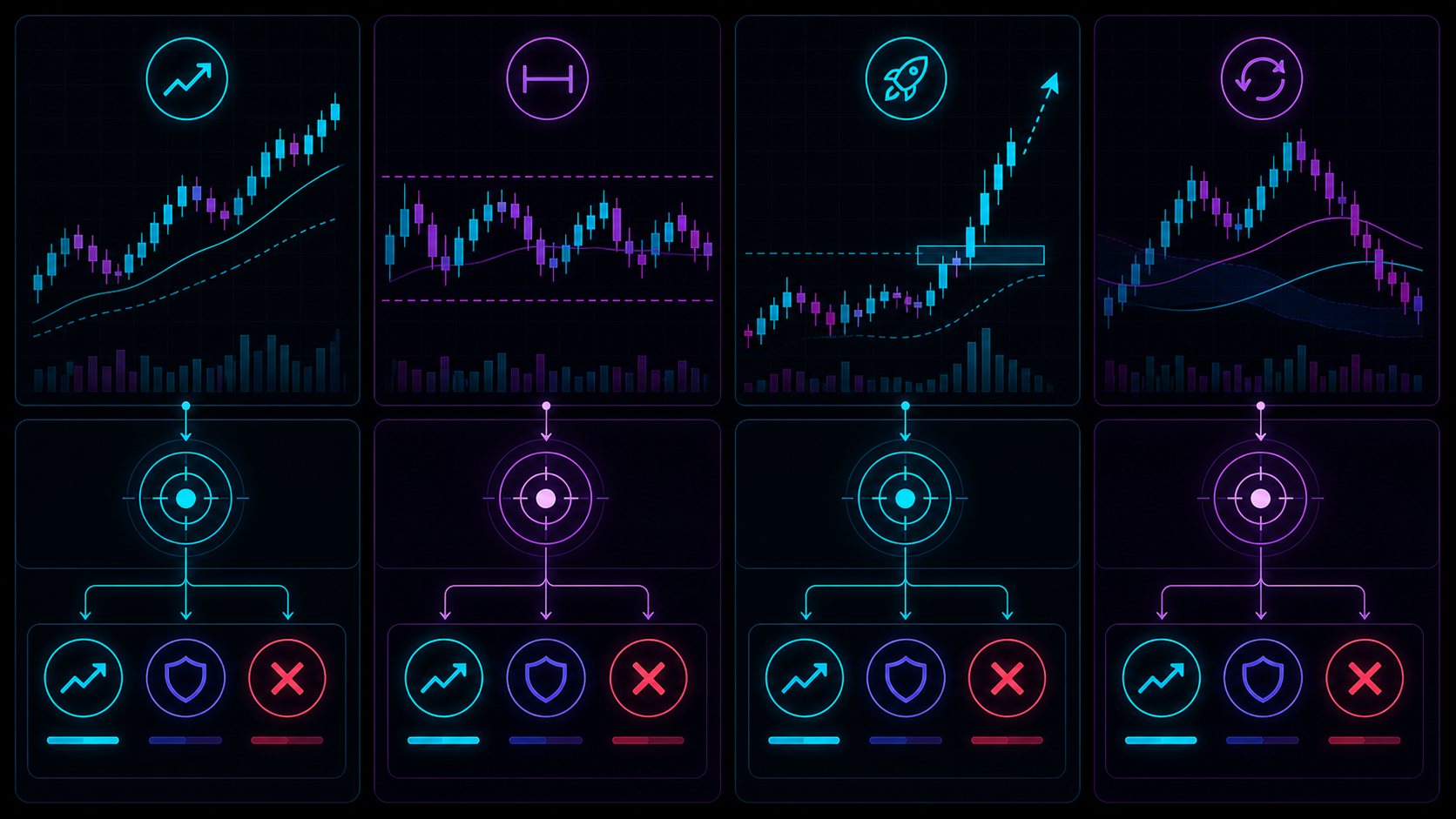
Adapting to regimes does not mean changing rules every day. It means defining which environments your strategy trades, reduces risk in, or avoids.
Common Regime Filters
A strategy can define filters for:
- trend direction;
- trend strength;
- range or balance;
- volatility compression;
- breakout expansion;
- macro crypto risk-on or risk-off;
- session behavior;
- liquidity quality.
Three Possible Responses
When regime changes, a strategy can:
- stay active;
- reduce risk;
- stop trading until conditions return.
This should be predefined. Otherwise, every market change becomes a discretionary debate.
Example
A trend-following pullback strategy might trade only when:
- higher timeframe trend is clear;
- price is above value for longs or below value for shorts;
- volatility is not chaotic;
- pullbacks hold structure;
- momentum resumes in the trend direction.
In a sideways range, the same strategy may produce low-quality signals. The correct adaptation may be to wait, not force trades.
Using ZenAlgo
Crypto Trend helps read broad crypto regime. Channel helps classify local trend and range structure. Avenger supports trend and value context, while Squeeze can help identify compression and expansion.
Regime Rule Template
Define:
- regimes the strategy trades normally;
- regimes where risk is reduced;
- regimes where no trades are allowed;
- indicator readings that identify each regime;
- review process when conditions change.
Continue Learning
- Review market regimes.
- Study volatility expansion and compression.
- Learn when to change a strategy.
Regime filters can be wrong or late. Reducing risk during unclear conditions is often safer than forcing adaptation in real time.