Why You Should Not Change Your Strategy Every Day
Changing strategy after every uncomfortable result prevents you from learning whether the strategy works.
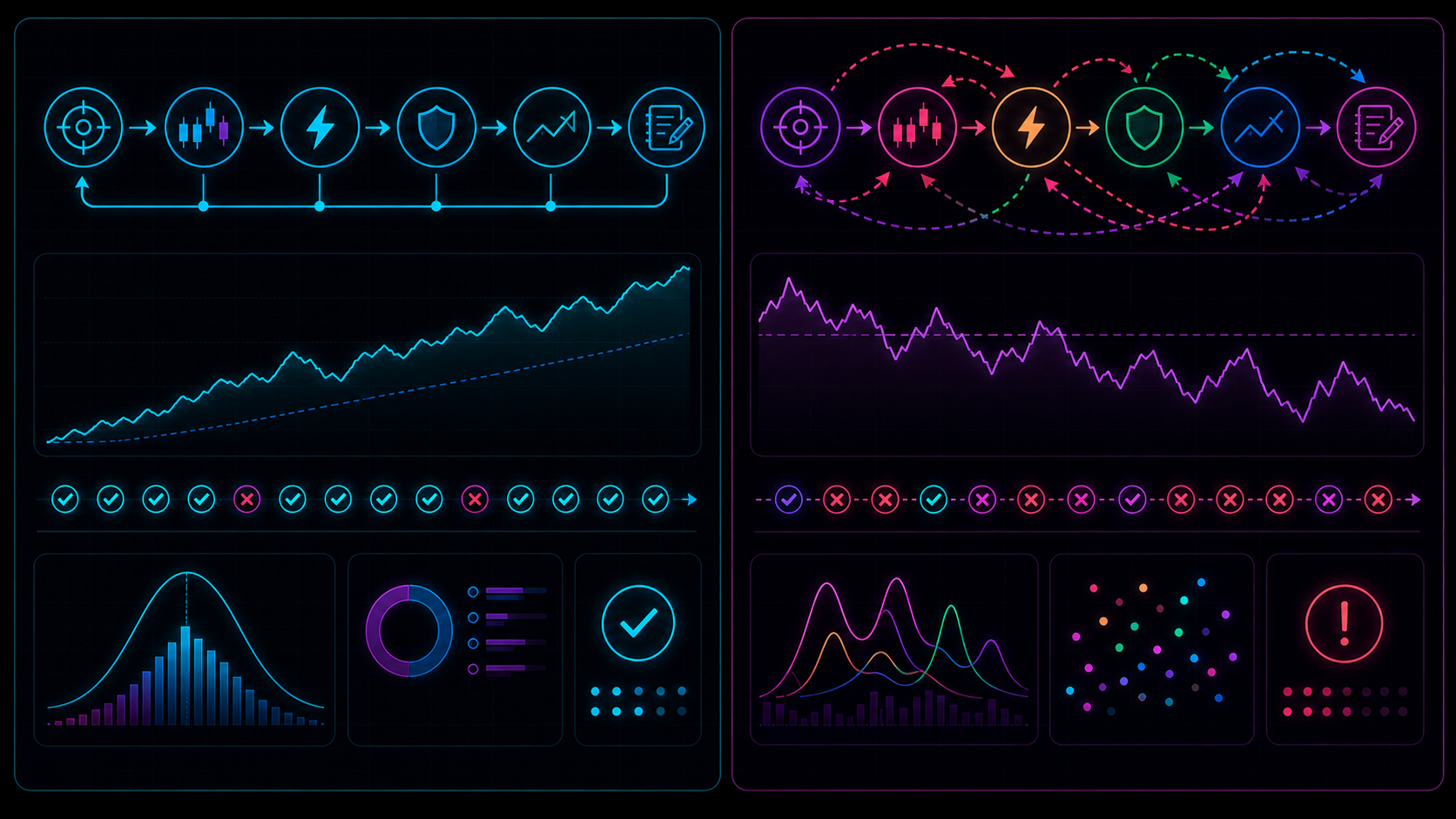
If you change rules every day, you do not have one strategy. You have a series of reactions to recent emotions.
The Damage of Strategy Hopping
Strategy hopping creates:
- inconsistent samples;
- false conclusions;
- emotional rule changes;
- overfitting to the last trade;
- lack of confidence;
- repeated beginner cycles.
The trader never gathers enough clean data to know what is happening.
One Loss Is Not Evidence
A single losing trade can mean:
- the strategy had normal variance;
- the setup was valid but failed;
- the trader broke a rule;
- market regime changed;
- execution was poor;
- the sample is too small to know.
Those causes require different responses. Changing the strategy immediately treats them all as the same problem.
Following the Strategy Is a Win
If you followed the rules exactly and lost, you still protected the process.
That matters because a strategy can only be evaluated when it is actually followed. A rule-following loss belongs in the sample. A random emotional trade does not.
When the Urge to Change Appears
Pause and ask:
- Is this based on a full review or one recent outcome?
- Did I follow the rules?
- Is the sample large enough?
- Did market conditions match the strategy?
- Am I trying to remove normal losses?
Using ZenAlgo
Use Engine and Five Elements as stable readiness checks. Changing which tools matter after every trade weakens the sample.
Continue Learning
- Learn when to change a trading strategy.
- Study sample size and expectancy.
- Review losing streak survival.
Keeping rules stable does not mean ignoring real problems. It means reviewing changes through evidence, not impulse.