How to Define Entry, Invalidation, and Exit Rules
Every strategy needs three separate decisions: where to enter, where the idea is wrong, and how to exit.
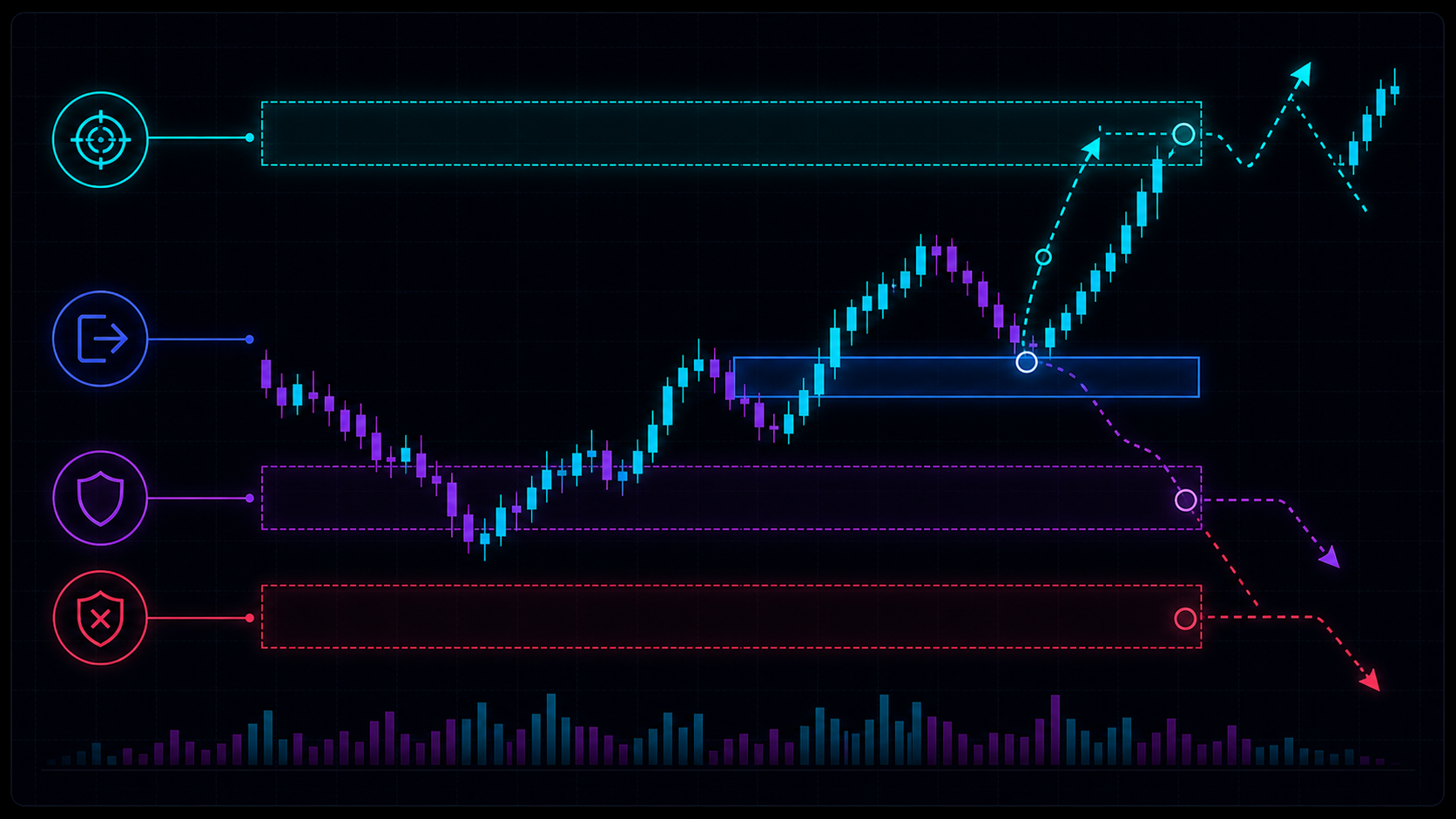
Entry starts the trade. Invalidation proves the idea wrong. Exit rules decide how the trade ends. Mixing these together creates emotional decisions.
Entry Rules
Entry rules define what must happen before risk is allowed.
Examples:
- price reclaims a level;
- candle closes above a structure point;
- divergence confirms with a break;
- pullback holds value;
- indicator readiness aligns with the setup.
Entry should be specific enough that two traders could identify the same event.
Invalidation
Invalidation is the price or condition that proves the trade idea no longer makes sense.
It is not the amount you wish to lose. It is the point where the thesis breaks.
Examples:
- bullish pullback loses the higher low;
- breakout falls back inside the range;
- short setup reclaims resistance;
- value rejection becomes acceptance.
Stop Placement
The stop-loss order is an execution tool based on invalidation and market behavior.
Do not choose position size first and then place the stop wherever the loss feels acceptable. That reverses the process.
Exit Rules
Exit rules can include:
- fixed targets;
- structure targets;
- partial profit levels;
- trailing logic;
- time-based exit;
- exit on opposite signal;
- exit when setup conditions disappear.
Using ZenAlgo
Grid helps mark structure and invalidation areas. ABC can help plan projected targets. Engine can help keep triggers tied to a setup family instead of random signals.
Practical Checklist
- What event allows entry?
- What price or condition invalidates the idea?
- Where does the stop order need to sit?
- What target makes sense before costs?
- What happens if price stalls?
- What cancels the setup before entry?
Continue Learning
- Learn position sizing.
- Review risk-to-reward.
- Build a trading plan.
Stops can slip, gaps can occur, and exits may execute differently from the plan. Define risk before entry and account for execution uncertainty.