Sample Size and Trading Expectancy
Sample size is the number of comparable trades used to evaluate a strategy. Expectancy is the average result the strategy may produce per trade over a large sample.
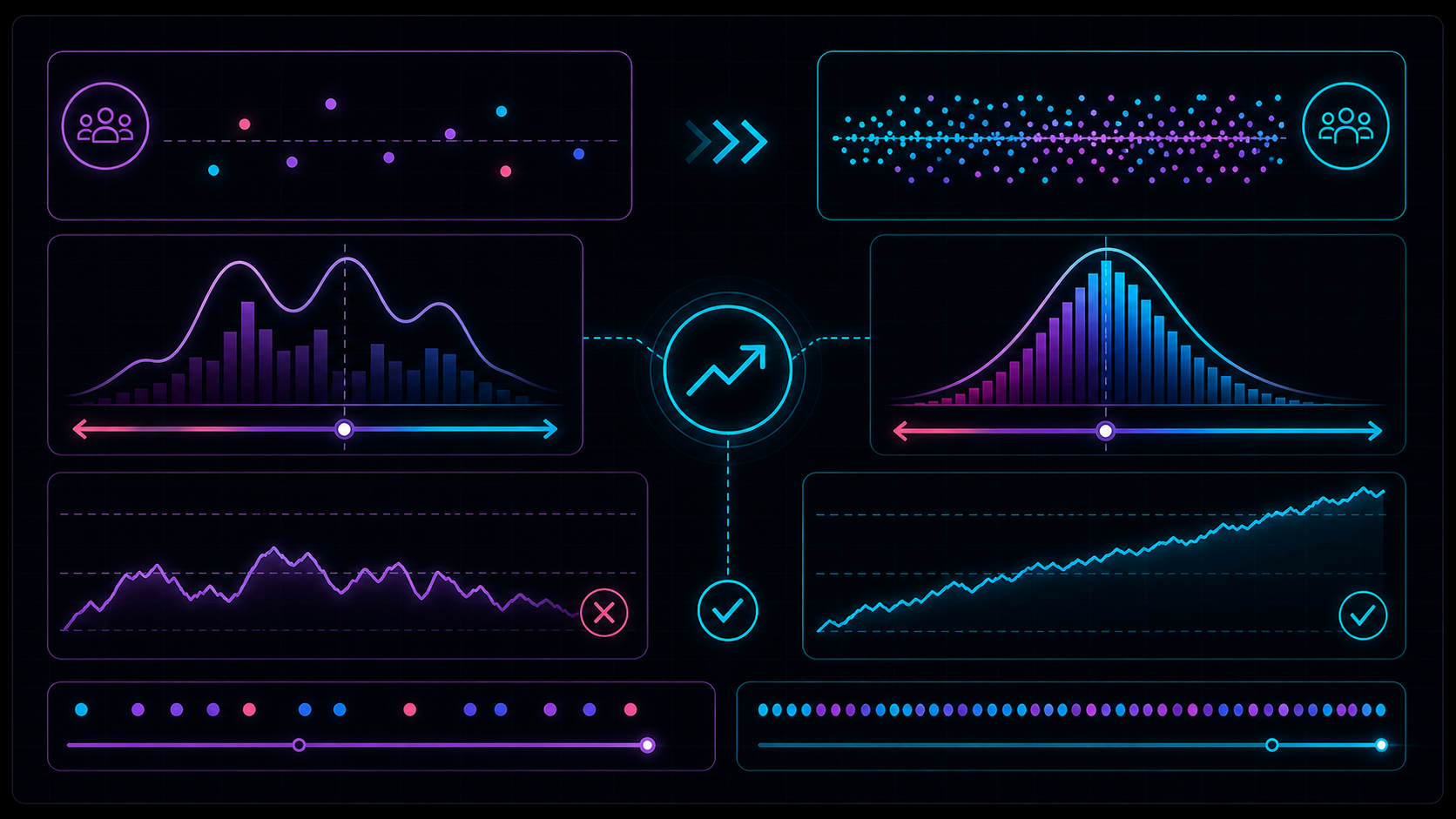
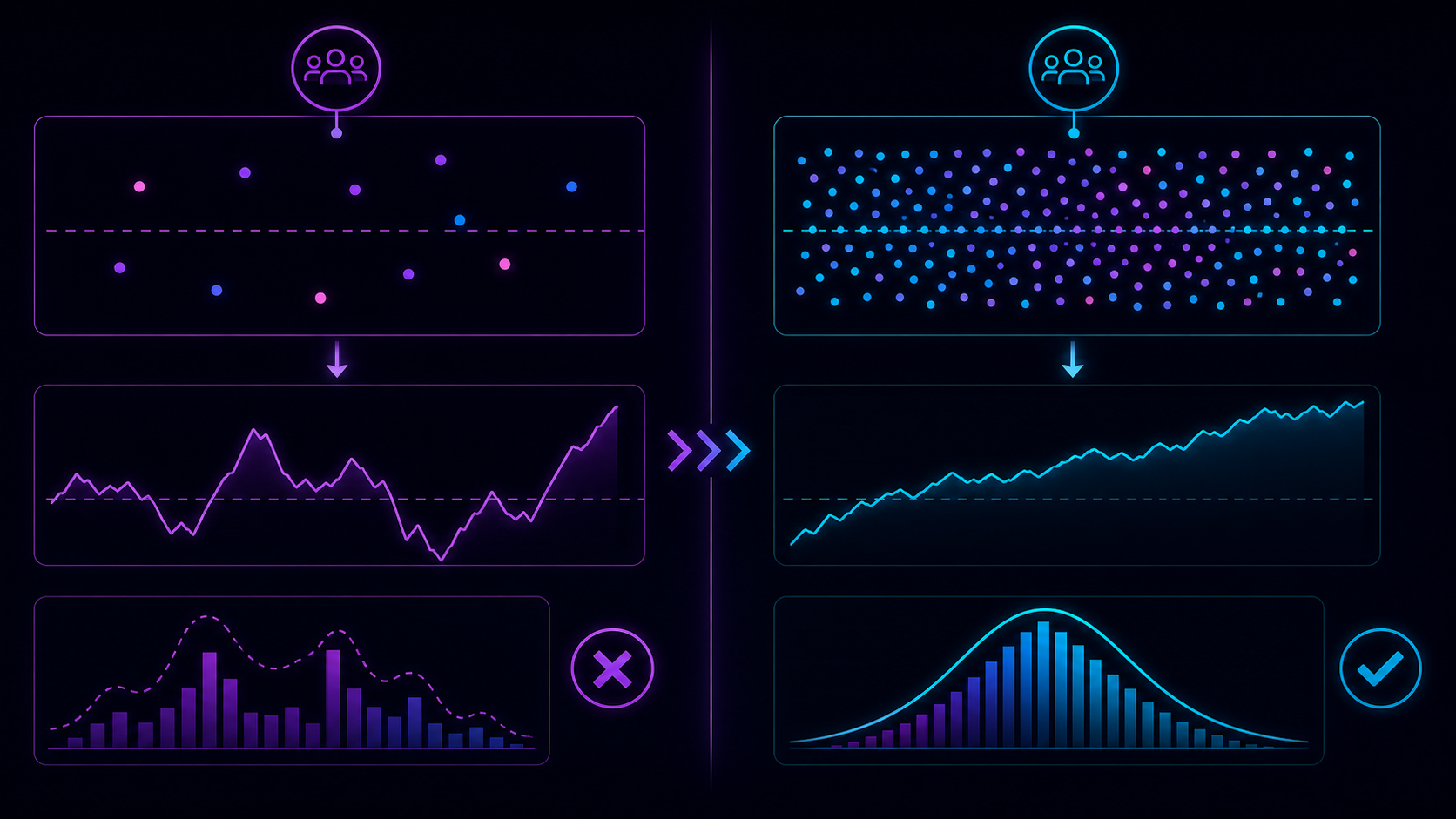
You cannot fairly judge a strategy from a few random trades, especially if those trades used different rules, indicators, timeframes, or market conditions.
Why a Few Trades Prove Almost Nothing
Three wins do not prove a strategy works. Three losses do not prove it fails.
Small samples are noisy because outcomes can cluster. A good strategy can lose several times in a row. A bad process can win several times in a row.
The question is not:
Did the last trade win?
The question is:
What happens when the same rules are applied consistently across a meaningful sample?
Comparable Trades Matter
A sample is useful only when trades are comparable.
Do not mix:
- different strategies;
- different indicator settings;
- different timeframes;
- different market regimes;
- discretionary rule changes;
- revenge trades;
- experiments and planned trades.
If the rules changed, you are starting a new sample.
Expectancy in Simple Terms
A simplified expectancy formula:
expectancy = (win rate x average win) - (loss rate x average loss)
Positive expectancy does not mean every trade wins. It means the average result may be positive over enough comparable trades.
Process Score vs PnL
Track process separately:
- Did the trade meet the setup rules?
- Was risk sized correctly?
- Was invalidation respected?
- Was the trade managed according to plan?
- Was the result logged honestly?
If process is poor, PnL is not trustworthy evidence.
Continue Learning
- Review win rate vs risk-to-reward.
- Learn why not to change strategy every day.
- Create a post-trade review.
Historical expectancy can change. A large sample improves interpretation but cannot guarantee future performance.