Win Rate vs Risk-to-Reward
Win rate tells you how often trades win. Risk-to-reward tells you how large wins and losses are. A strategy needs both to be understood.
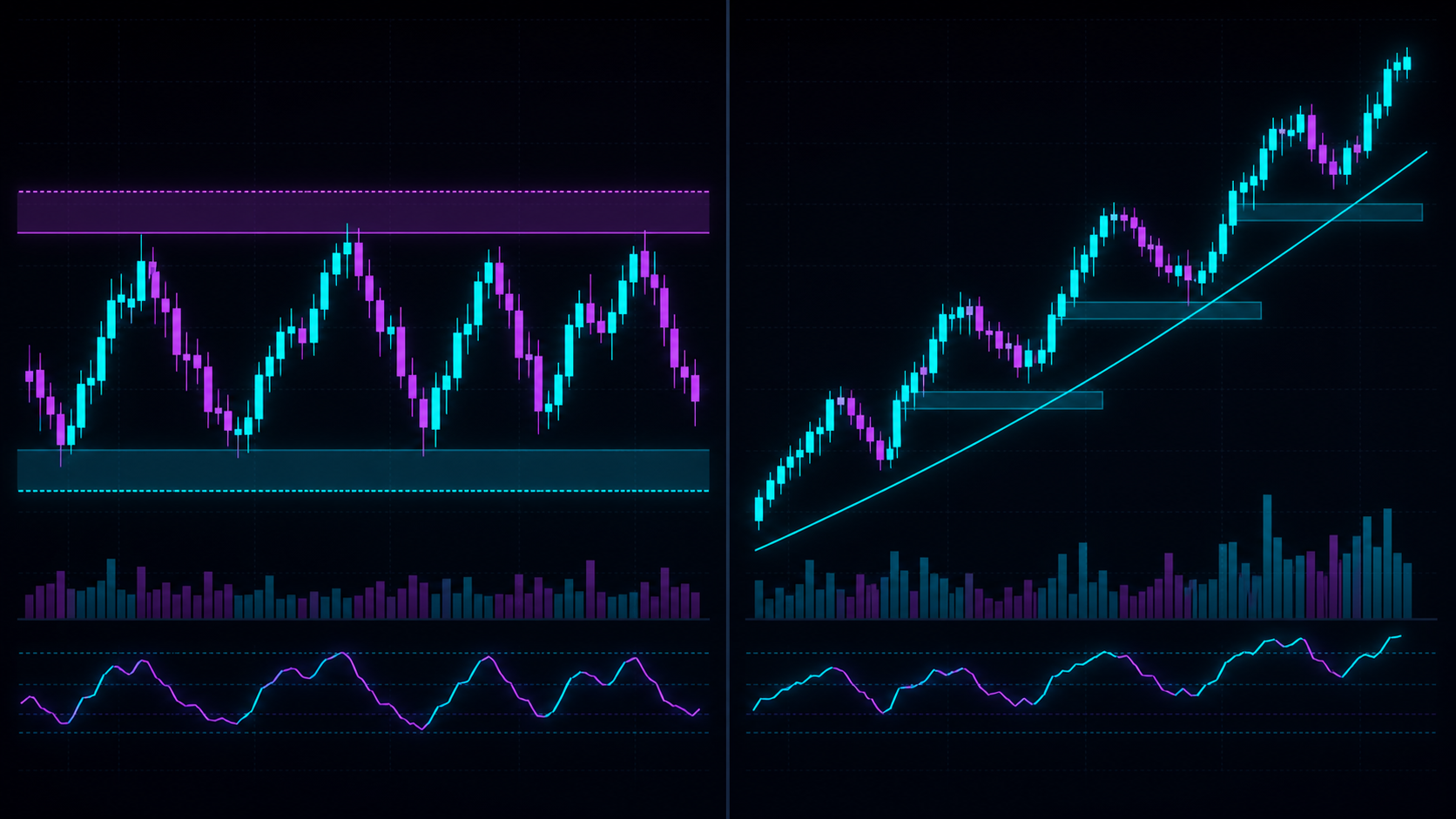
A high win rate can lose money if occasional losses are too large. A low win rate can make money if average winners are sufficiently larger than average losses. Expectancy combines both sides.
Win Rate Alone Is Incomplete
Win rate is:
winning trades ÷ total trades
A strategy winning 80% of trades may still fail if its losses are much larger than its wins. A strategy winning 40% may succeed if winners are substantially larger.
High win rate often feels comfortable, which can hide dangerous tail losses.
Expectancy Connects the Metrics
A simplified expectancy formula in R:
expectancy = (win rate × average win) - (loss rate × average loss)
Example:
- win rate:
45%; - average win:
+2R; - loss rate:
55%; - average loss:
-1R.
Expected result:
(0.45 × 2R) - (0.55 × 1R) = +0.35R per trade
This is a sample average, not a guaranteed result for the next trade.
Break-Even Win Rate
Ignoring costs, larger average winners require a lower break-even win rate.
| Average win vs average loss | Approximate break-even win rate |
|---|---|
1:1 | 50% |
2:1 | 33.3% |
3:1 | 25% |
Fees, slippage, partial exits, and real management increase the required win rate.
Strategy Profiles Feel Different
High Win Rate, Small Winners
Often creates frequent positive feedback but may be vulnerable to occasional large losses.
Lower Win Rate, Large Winners
May have positive expectancy but requires patience through longer losing streaks.
The best profile is one with a real edge that the trader can execute consistently.
Sample Size Matters
A short run of trades can produce a misleading win rate and average R.
Evaluate:
- enough trades across varied conditions;
- changes in market regime;
- execution costs;
- outlier wins and losses;
- whether rules were followed.
One exceptional winner can make a weak small sample look strong.
Key Takeaways
- Win rate does not measure profitability alone.
- Average win and average loss matter equally.
- Expectancy combines outcome size and frequency.
- Costs raise the break-even requirement.
- The strategy profile must be emotionally executable.
Continue Learning
- Understand maximum drawdown.
- Prepare for losing streaks.
- Review risk-to-reward.
Historical expectancy and win rate can change. Small samples and changing market conditions may produce misleading estimates.