Risk Management for Traders
Trading outcomes are uncertain. Risk management decides how much damage uncertainty is allowed to cause.
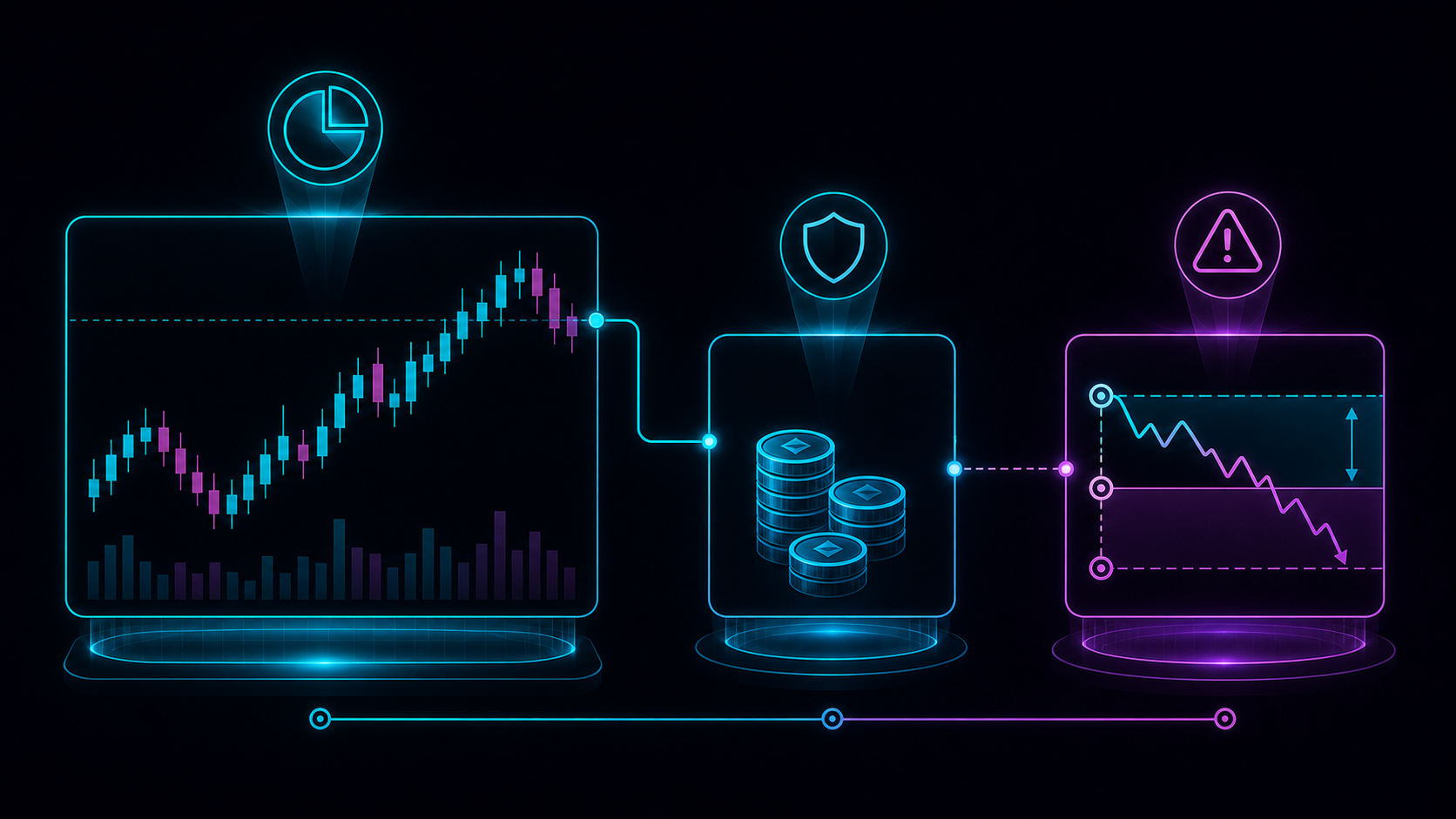
Risk management is the process of limiting loss at the trade, strategy, and account level. Its goal is to keep capital and decision-making intact long enough for a tested edge to play out.
A trader can be right about direction and still lose too much. They can have a good setup and size it badly. They can place a stop and then move it. They can survive one trade but lose control during a losing streak.
That is why risk management is not a single stop-loss order. It is the whole process that keeps uncertainty from becoming an emergency.
Risk Is Decided Before the Trade
The cleanest risk decision happens before entry, while you are still calm.
First, define the idea. Why does this setup make sense? Then define invalidation. What would prove the idea wrong? Only after that should you calculate position size. If the stop distance is large, size must become smaller. If the invalidation is unclear, the trade is not ready.
Many traders reverse this order. They choose a position size first, then search for a stop that feels tolerable. That creates emotional risk. The stop is no longer based on the chart idea; it is based on discomfort.
Three Levels of Risk
Trade risk is the loss on one idea if it fails. Portfolio risk is the combined exposure across open positions, especially if they are correlated. Ruin risk is the chance that a loss, losing streak, leverage event, or behavior pattern removes your ability to continue.
These levels interact. A trader may risk a reasonable amount on each trade but still be overexposed because every position depends on the same market direction. Several crypto longs during a broad market selloff may behave like one oversized trade.
Good risk management asks about the account, not just the individual setup.
Losses Are Operating Costs
Every real strategy loses. Risk management turns those losses into planned operating costs rather than emotional emergencies.
That mindset matters. If a normal loss feels unbearable, the position is probably too large or the plan is not trusted. A trader who cannot accept one planned loss may move the stop, revenge trade, or abandon the strategy after a few red trades.
Risk management protects psychology as much as capital.
Risk Control Does Not Create an Edge
Risk management cannot make random entries profitable. It helps a real edge survive variance.
A complete process still needs a tested setup, consistent execution, realistic costs, enough observations, and honest review. This is why risk connects directly to Building a Trading Strategy, Trading Psychology and Performance, and Journaling and Metrics.
A Practical Risk Sequence
Before placing an order, describe the setup, the invalidation, the account risk, the position size, the reward area, and the open-position correlation. If you cannot explain those pieces in plain English, the trade is not ready.
This sequence is boring by design. Boring risk management is a feature. Exciting risk management usually means the account is carrying too much pressure.
Continue Learning
- Decide how much to risk per trade.
- Learn position sizing.
- Understand risk of ruin.
- Plan entry, stop, and targets before execution.
No risk framework can guarantee capital preservation. Trading can result in partial or total loss.