How Much Should You Risk Per Trade?
Risk per trade is the amount of account equity you intend to lose if a trade reaches its planned invalidation.
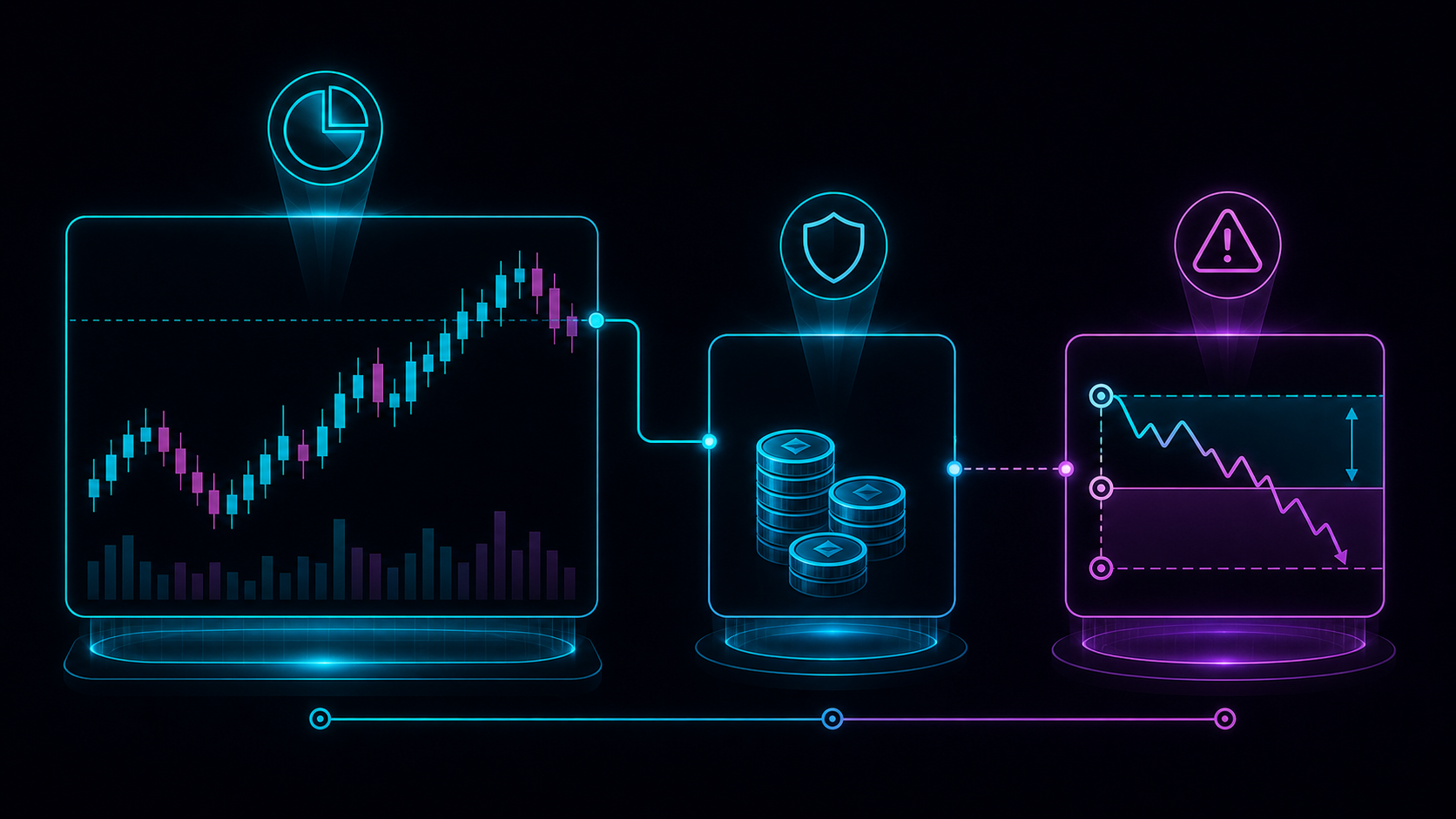
There is no universal correct percentage. Choose risk small enough that a normal losing streak, execution error, or correlated move cannot force you to abandon the strategy or account.
The most common beginner question is, "Should I risk 1% per trade?"
The honest answer is: maybe. The number is less important than whether you can survive the consequences of that number.
If a trader risks too much, every trade becomes emotionally loud. A normal loss feels like a personal event. A normal losing streak feels like a crisis. The trader starts moving stops, skipping valid setups, or trying to win money back quickly.
Risk per trade is not only a math decision. It is also a psychology decision.
Think in Currency and Percentage
Always know risk in two ways: the currency amount and the percentage of current account equity.
If a $10,000 account risks $50, planned risk is 0.5%. If the account draws down, percentage-based risk naturally reduces position size. If the account grows, it scales risk gradually. Fixed currency risk can feel emotionally stable, but it may become too large or too small relative to the account over time.
Neither approach is automatically perfect. What matters is that the number is chosen before the trade, not negotiated after entry.
Smaller Risk Buys More Attempts
Reducing risk per trade slows drawdowns and gives you more observations before major damage occurs. It also makes losing streaks easier to follow, which is more important than many beginners realize.
Imagine two traders with the same strategy. One risks enough that five losses make them panic. The other risks small enough that five losses are uncomfortable but manageable. The second trader has a better chance of reviewing the strategy honestly, because the account and the nervous system are still intact.
The trade-off is slower growth when the strategy performs well. That is acceptable for a learner. Early trading is not the place to optimize for maximum speed.
Account Risk Is Not Margin
Allocating $100 margin does not necessarily mean risking $100.
Planned account risk depends on position size, distance from entry to stop, fees, slippage, and contract mechanics. Margin only supports exposure. This is especially important with leverage, where a small amount of collateral can control a much larger position.
Review what leverage changes before using leveraged products.
Include Open and Correlated Risk
Risk is not isolated if your positions move together.
Three small crypto longs can behave like one larger crypto long during a broad market decline. Several technology stocks can react to the same index move. Multiple currency trades may share the same underlying currency exposure.
Before adding a trade, ask what happens if correlated markets move against all open positions at once.
When to Reduce Risk
Reduce risk, or skip trading entirely, when liquidity is thin, spreads are unusually wide, important news is approaching, drawdown is beyond normal expectations, or emotional discipline is impaired.
Do not increase risk to recover losses faster. That is usually the moment when risk should go down, not up.
Continue Learning
- Calculate position size.
- Understand maximum drawdown.
- Prepare for losing streaks.
- Track risk discipline with rule adherence metrics.
Historical drawdowns and losing streaks can underestimate future losses. Risk only capital you can afford to lose.