Risk-to-Reward Ratio Explained
Risk-to-reward compares the amount a trade may lose with the amount it may gain at a planned target.
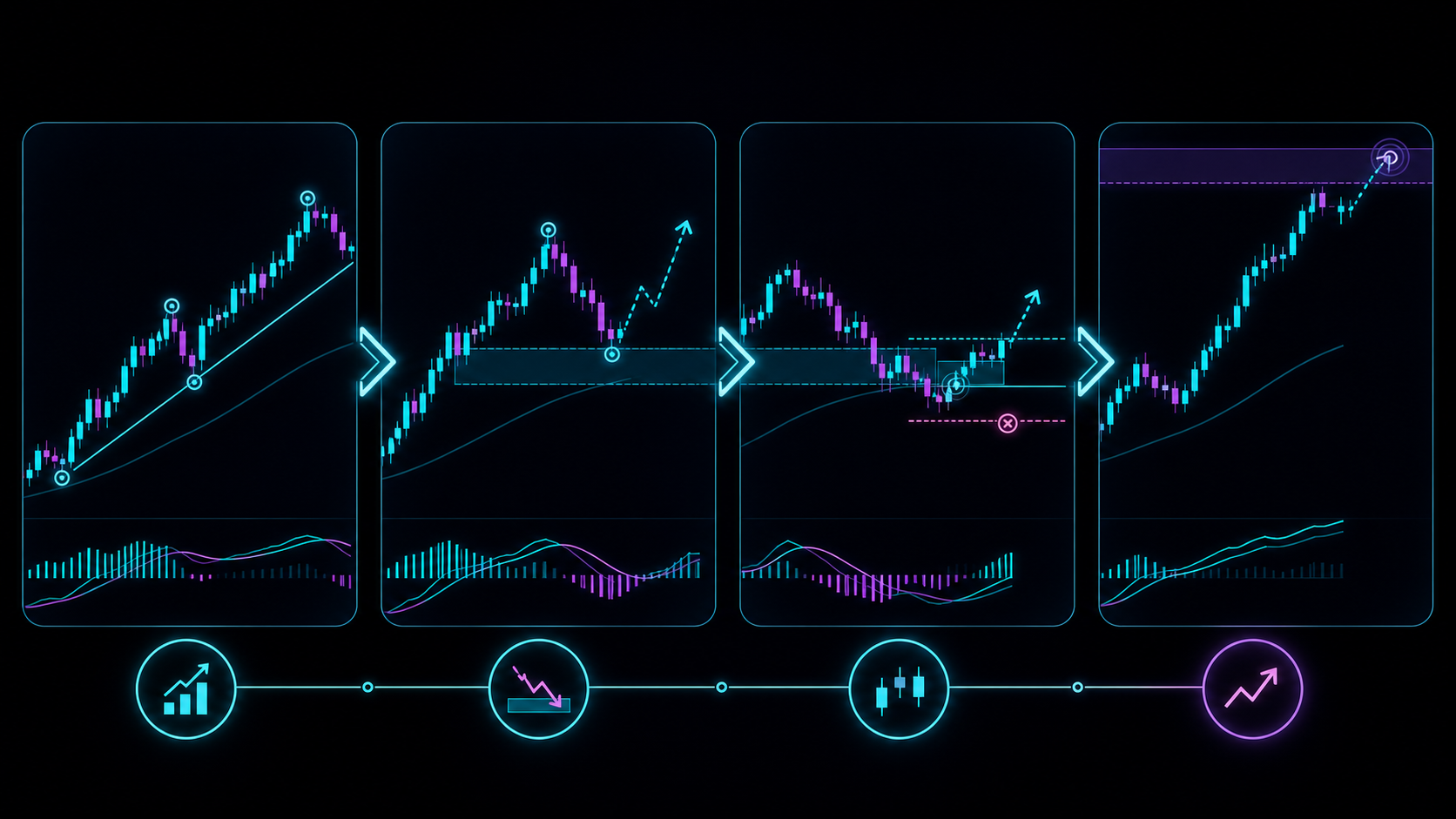
If a trade risks $100 to target $200, its planned reward-to-risk is 2:1, often described as +2R. The ratio matters only when the stop and target are realistic and the setup has a tested probability of reaching them.
What Is R?
1R is the amount initially risked on a trade.
- A full planned loss is approximately
-1R. - A win equal to the original risk is
+1R. - A win twice the original risk is
+2R.
Using R makes trades with different account sizes and position quantities comparable.
Calculate Planned Reward-to-Risk
For a long:
planned reward = target price - entry price
planned risk = entry price - stop price
Then:
reward-to-risk = planned reward ÷ planned risk
Use actual tradable prices and include expected costs.
A High Ratio Is Not Automatically Better
A distant target may create an attractive ratio on paper but have a low probability of being reached.
The ratio becomes meaningful only when:
- the target aligns with realistic structure;
- the stop aligns with valid invalidation;
- execution costs are included;
- management rules are consistent;
- results are measured across many trades.
Moving a target farther merely to display 3R does not improve the setup.
R Changes During Trade Management
Partial exits, trailing stops, slippage, and discretionary decisions change realized R.
Track:
- planned R;
- maximum favorable and adverse movement;
- realized R;
- reasons for deviations from the plan.
This reveals whether management improves or damages results.
Reward-to-Risk and Win Rate Work Together
A strategy can succeed with:
- a lower win rate and larger average wins;
- a higher win rate and smaller average wins.
Neither ratio nor win rate alone defines profitability. The combined concept is expectancy.
Use Structure for Realistic Targets
Potential targets may include:
- prior swing highs or lows;
- range boundaries;
- objective value or deviation areas;
- areas where opposing liquidity may appear.
Grid and Levels can help map reference areas. They do not guarantee price will reach them.
Common Mistakes
- Rejecting every trade below an arbitrary ratio.
- Using unrealistic targets to improve the displayed ratio.
- placing an excessively tight stop;
- ignoring win probability and execution costs;
- comparing planned R with realized cash PnL inconsistently.
Key Takeaways
- R standardizes trade results relative to initial risk.
- Reward-to-risk depends on realistic stops and targets.
- A high ratio does not guarantee a high-quality setup.
- Track planned and realized R separately.
- Evaluate reward-to-risk together with win rate and expectancy.
Continue Learning
- Compare win rate and risk-to-reward.
- Learn how to place a stop.
- Understand risk per trade.
Targets and reward-to-risk estimates are hypothetical. Price may reverse, gap, or execute differently from the plan.