What Is Leverage in Trading?
Leverage allows a trader to control more market exposure than the amount of margin allocated to the position.

Leverage reduces the margin required to open a given position. It magnifies PnL relative to that margin, but it does not improve the trade setup, win rate, or maximum safe account risk.
Exposure, Margin, and Risk Are Different
These three concepts must remain separate:
- Notional exposure: the total value controlled by the position.
- Margin: collateral allocated to support the position.
- Account risk: the amount you expect to lose if the planned invalidation is reached.
A trader can use high leverage with a small position and limited account risk. Another trader can use low leverage with an oversized position and excessive risk.
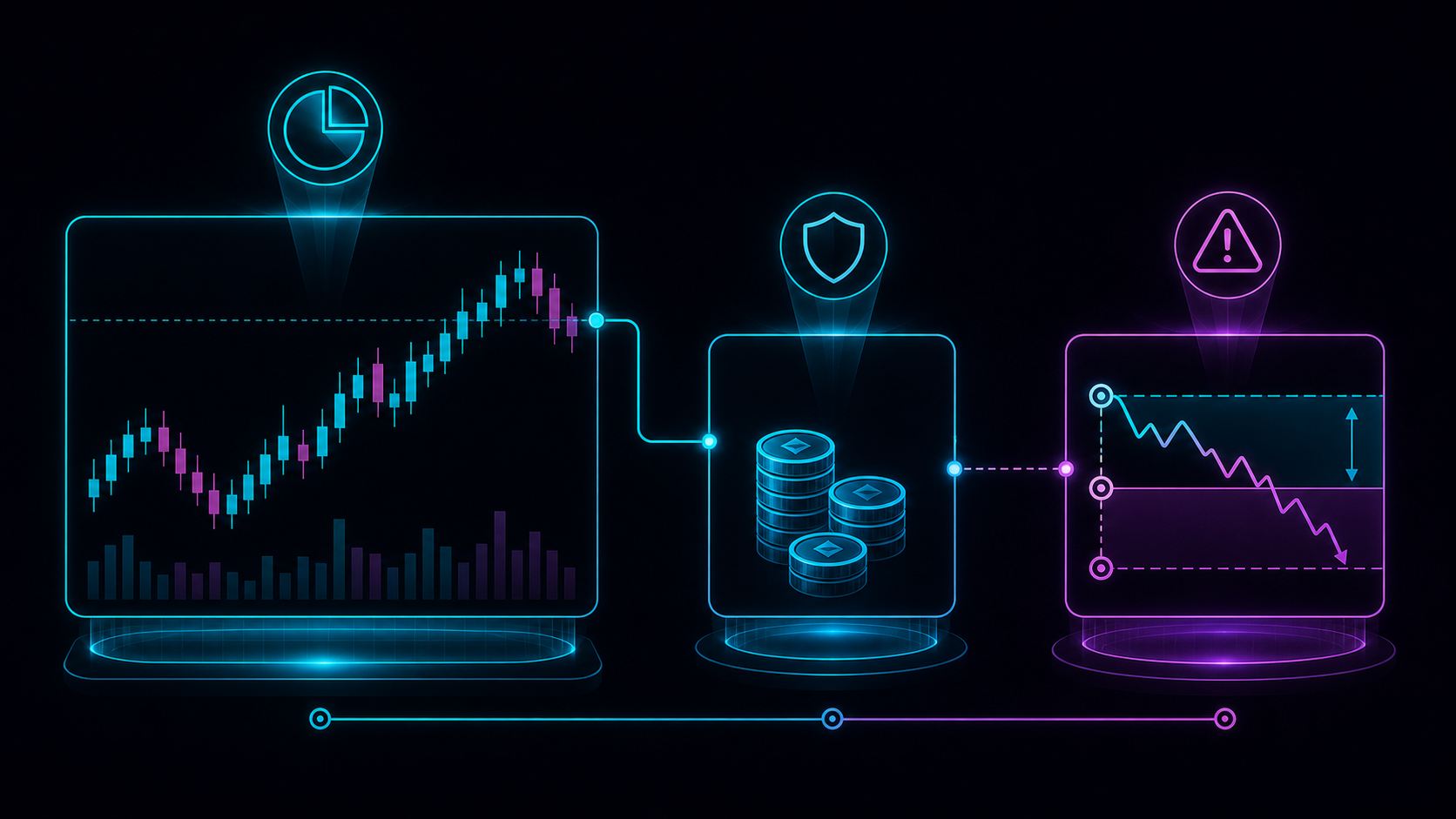
How Leverage Changes PnL
PnL responds to position size, not to the leverage setting by itself.
If two traders hold the same notional position at the same entry and exit, their gross PnL is similar even if one allocated more margin. The trader using less margin experiences a larger percentage change relative to that margin and sits closer to liquidation.
Leverage changes capital efficiency and liquidation distance. Position size changes the currency amount gained or lost.
A Simple Example
Suppose a trader controls a position worth $1,000.
- A
1%favorable move changes gross PnL by roughly$10. - A
1%adverse move changes gross PnL by roughly-$10.
This remains true whether the position used $1,000 margin or substantially less margin. Fees, funding, and contract rules can alter the final result.
Why High Leverage Feels Dangerous
Higher effective leverage generally means:
- less margin buffer;
- liquidation closer to entry;
- smaller adverse moves can create large margin losses;
- less tolerance for volatility and execution errors;
- greater temptation to oversize.
The danger is not merely the number displayed by the platform. It is the combination of notional size, margin, volatility, and exit discipline.
Leverage Does Not Improve a Setup
Leverage cannot:
- make analysis more accurate;
- turn poor reward-to-risk into good reward-to-risk;
- prevent slippage;
- create liquidity;
- improve market structure;
- guarantee that a stop executes.
It only changes how efficiently and aggressively exposure is financed.
A Safer Planning Sequence
- Define the entry.
- Define the invalidation and stop distance.
- Choose the maximum account loss.
- Calculate position size from risk.
- Only then choose enough leverage and margin to support that position safely.
Never begin with “How much leverage should I use?” Begin with “How much can this idea lose?”
Common Misunderstandings
- “More leverage creates more profit.” More position size creates more PnL movement.
- “Using only a small margin means only that margin is at risk.” This depends on margin mode and venue rules.
- “A distant liquidation price makes the trade safe.” Risk can still be excessive before liquidation.
- “Stop loss removes leverage risk.” Stops can slip or fail in fast markets.
Key Takeaways
- Leverage reduces required margin for a given exposure.
- Position size determines PnL sensitivity.
- Margin allocated is not the same as intended account risk.
- Higher effective leverage reduces the buffer before liquidation.
- Calculate risk and position size before selecting leverage.
Continue Learning
- Learn margin and liquidation.
- Compare isolated and cross margin.
- Review slippage, spread, and fees.
Leverage can cause rapid losses and forced liquidation. Venue rules, gaps, and slippage can make actual losses exceed the planned amount.