Margin and Liquidation Explained
Margin is collateral supporting a leveraged position. Liquidation is a forced closure when the position no longer satisfies the venue's margin requirements.
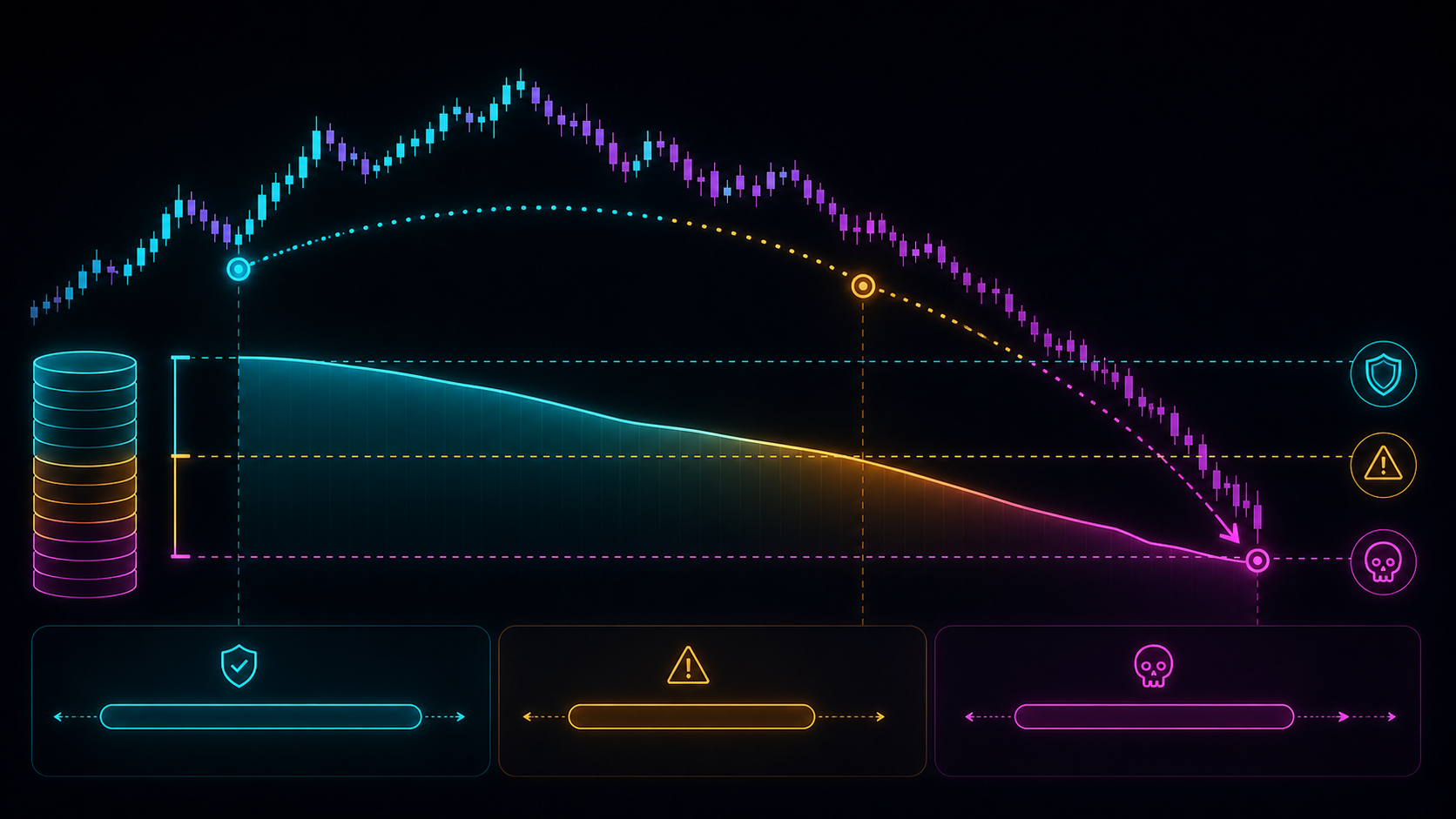
Initial margin helps open a position. Maintenance margin is the minimum required to keep it open. If losses reduce the available margin below the required threshold, the venue may liquidate the position.
Initial and Maintenance Margin
Initial Margin
The collateral required to open a leveraged position.
Maintenance Margin
The minimum collateral the venue requires while the position remains open.
Maintenance requirements may increase with position size, volatility, or contract-specific risk tiers.
What Causes Liquidation?
As a leveraged position loses value, its margin buffer declines. When available collateral is no longer sufficient, the venue begins its liquidation process.
The exact process may involve:
- partial position reduction;
- full forced closure;
- liquidation fees;
- insurance funds;
- auto-deleveraging;
- additional account balance under cross margin.
Read the venue's current rules before trading.
Mark Price vs Last Traded Price
Many derivatives venues use a mark price rather than the latest traded price to determine unrealized PnL and liquidation.
The mark price is designed to reduce manipulation and temporary price spikes. It may combine an index price and contract basis.
This means:
- the chart's last price may differ from the liquidation reference;
- a stop order and liquidation may use different trigger prices;
- liquidation calculations shown by the venue are estimates that can change.
Liquidation Is Not a Stop Loss
A stop loss is a planned exit intended to control risk. Liquidation is a forced risk-management action taken by the venue.
Waiting for liquidation usually means:
- the position was oversized;
- the planned invalidation was ignored;
- fees and slippage may be larger;
- control over the exit was surrendered.
A strategy should normally be invalidated well before liquidation becomes relevant.
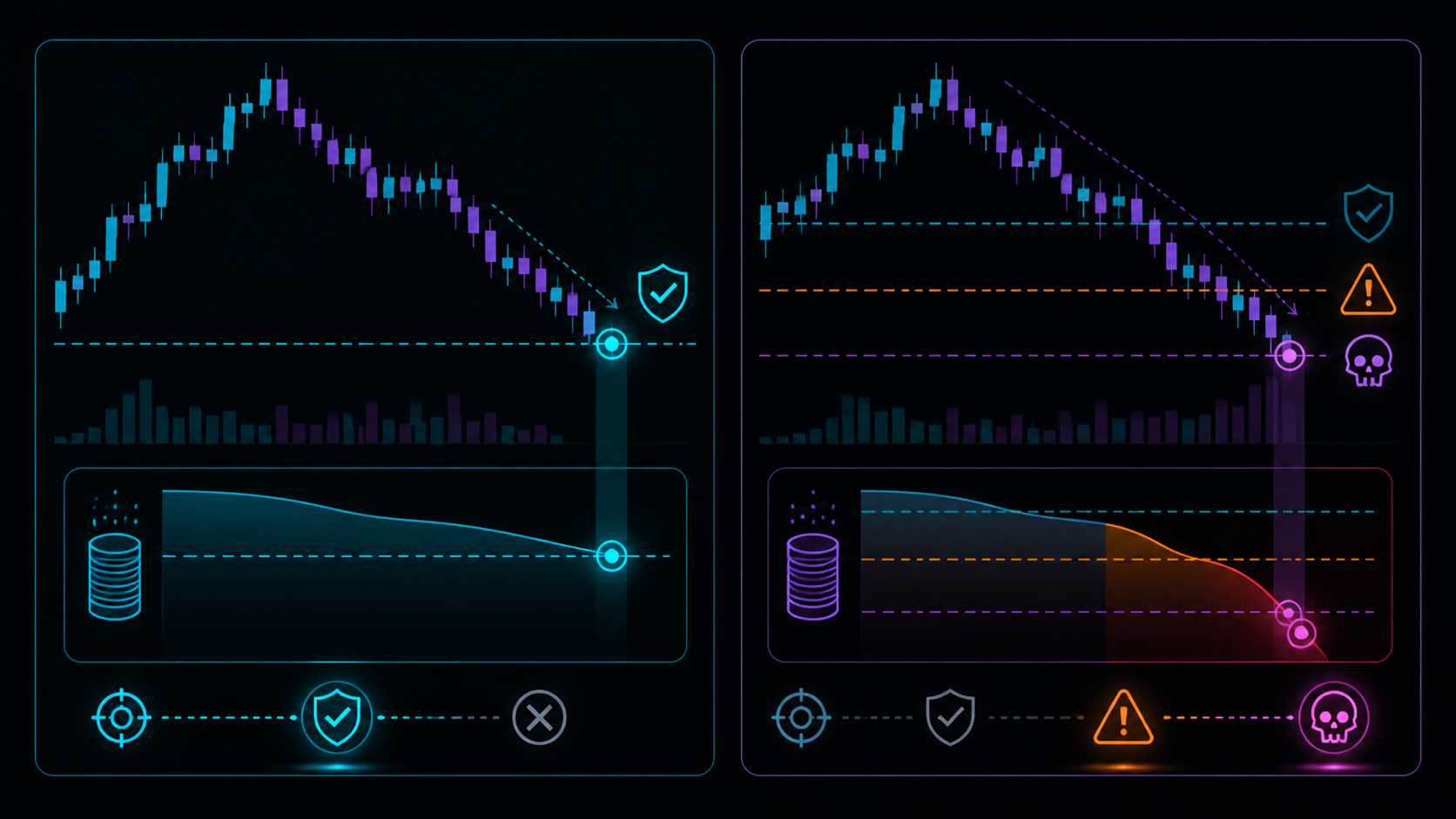
What Moves Liquidation Closer?
- Larger notional position.
- Less allocated margin.
- Higher effective leverage.
- Accumulating funding and fees.
- Adverse PnL on related positions under cross margin.
- Increasing maintenance requirements.
Adding margin can move liquidation farther away, but it also places more capital at risk if the thesis remains invalid.
A Practical Safety Checklist
Before opening a leveraged position:
- Verify which price triggers liquidation.
- Confirm margin mode.
- Check maintenance margin and risk tiers.
- Define a stop before liquidation.
- Include fees, funding, and possible slippage.
- Understand whether losses can affect the rest of the account.
Common Misunderstandings
- “The displayed liquidation price is guaranteed.” It can change with fees, funding, margin, and venue rules.
- “Liquidation happens only at zero margin.” Venues close positions before collateral is fully exhausted.
- “Adding margin fixes a losing trade.” It changes the buffer, not the trade thesis.
- “A stop always executes first.” Gaps and fast markets can skip or slip stops.
Key Takeaways
- Margin is collateral, not a measure of setup quality.
- Maintenance margin determines whether a leveraged position can remain open.
- Liquidation is a forced closure, not a trading plan.
- Mark price may differ from the chart's last traded price.
- Planned invalidation should normally occur before liquidation.
Continue Learning
- Compare isolated and cross margin.
- Understand leverage.
- Learn how order types affect exits.
Liquidation systems and loss limits vary by venue. In extreme conditions, actual losses can exceed expected losses.