Market, Limit, Stop, and Stop-Limit Orders
An order tells a venue how you want to enter or exit. Different order types prioritize execution speed, price control, or conditional activation.
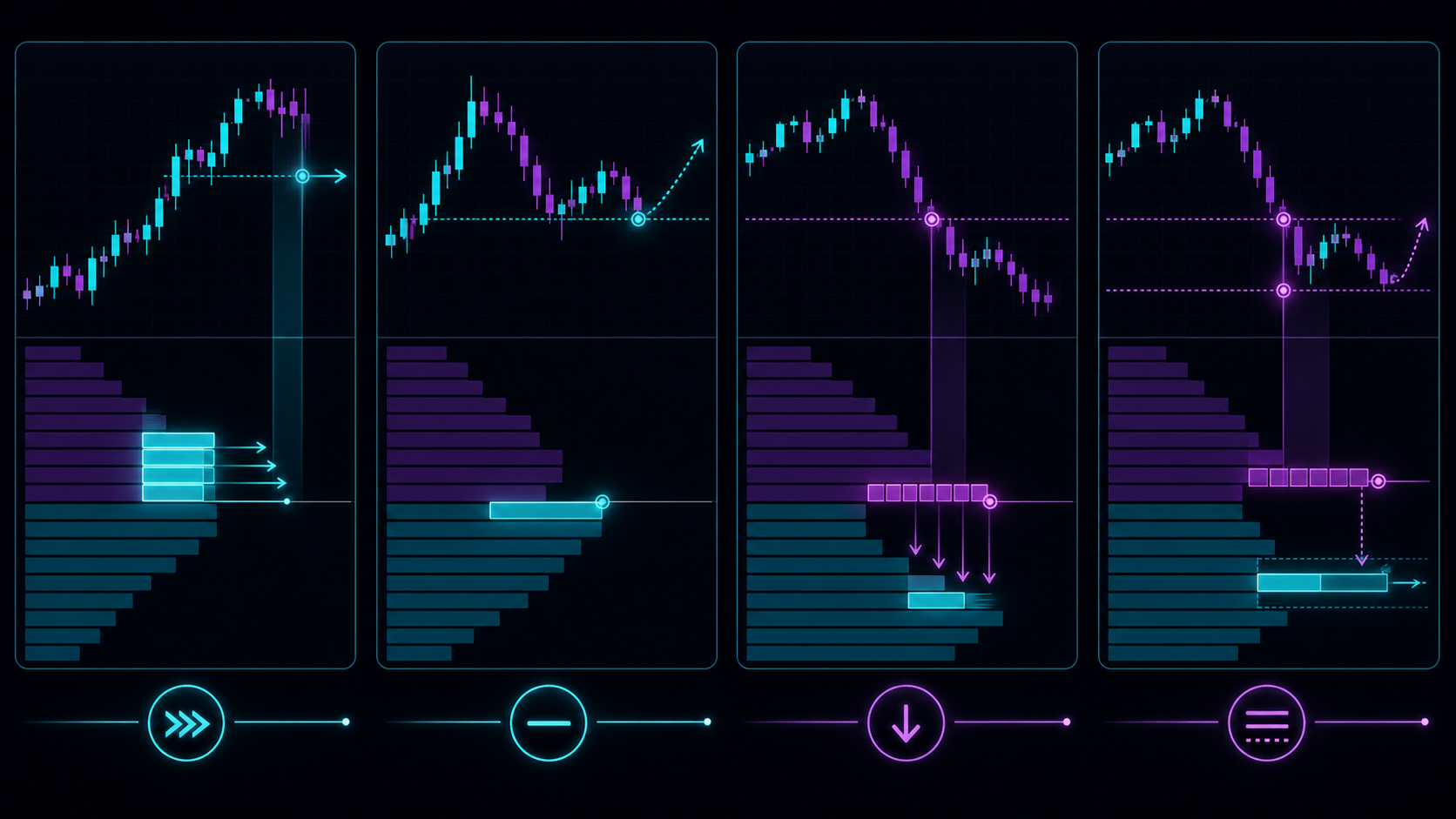
Market orders prioritize immediate execution. Limit orders prioritize a chosen price or better. Stop orders activate after a trigger and then prioritize execution. Stop-limit orders activate after a trigger but retain price limits, so they may not fill.
Market Orders
A market order executes against the best available resting orders.
Useful when:
- immediate execution matters most;
- the market is liquid;
- the position must be closed quickly.
Main risk: the final price can be worse than expected because of spread, slippage, or thin liquidity.
A market order guarantees neither one exact price nor one single fill.
Limit Orders
A limit order executes only at the specified price or better.
Useful when:
- price control matters;
- the trader is willing to miss the trade;
- the order can wait.
Main risk: price may touch or approach the level without filling the order, or only part of it may fill.
A resting limit order often provides liquidity, but venue rules determine whether it receives maker treatment.
Stop Orders
A stop order remains inactive until a trigger price is reached. It then usually becomes a market order.
Common uses:
- limiting losses;
- entering after a breakout;
- protecting a profitable position.
Main risk: after triggering, execution can slip significantly.
Stop-Limit Orders
A stop-limit order activates at the stop price and then places a limit order.
This provides price control after activation but creates a critical trade-off: the order may not execute at all if price moves through the limit too quickly.
Stop-limit orders can be inappropriate when exiting immediately is more important than controlling the exact price.
Compare the Priorities
| Order type | Main priority | Main risk |
|---|---|---|
| Market | Immediate execution | Uncertain price |
| Limit | Price control | No fill or partial fill |
| Stop-market | Conditional execution | Slippage after trigger |
| Stop-limit | Conditional price control | Triggered but unfilled |
No order type guarantees both execution and exact price in every market.
Trigger Price Matters
Venues may allow stops to trigger from:
- last traded price;
- mark price;
- index price;
- bid or ask.
Confirm the trigger source. It can determine whether a stop activates during a temporary contract wick or whether liquidation occurs before the stop.
Reduce-Only and Position-Specific Orders
A reduce-only instruction prevents an exit order from increasing or reversing a position. This is particularly important with derivatives.
Also verify:
- whether the venue uses one-way or hedge mode;
- whether orders are linked to a specific position;
- what happens to remaining orders after a position closes.
A Practical Order Checklist
- Is immediate execution or price control more important?
- How liquid is the market?
- What price triggers the order?
- Can partial fills occur?
- Should the order be reduce-only?
- What happens during a gap or fast move?
- How long should the order remain active?
Key Takeaways
- Market orders prioritize execution; limit orders prioritize price.
- Stop orders become active only after a trigger.
- Stop-limit orders can fail to fill during fast movement.
- Trigger source and reduce-only settings matter.
- Choose an order type based on the failure you can tolerate.
Continue Learning
- Understand slippage, spread, and fees.
- Learn liquidity.
- Review margin and liquidation.
Stops and conditional orders can fail, slip, or remain unfilled during gaps, outages, and fast markets.