Slippage, Spread, and Trading Fees
A strategy earns the difference between entries and exits only after every execution cost is paid.
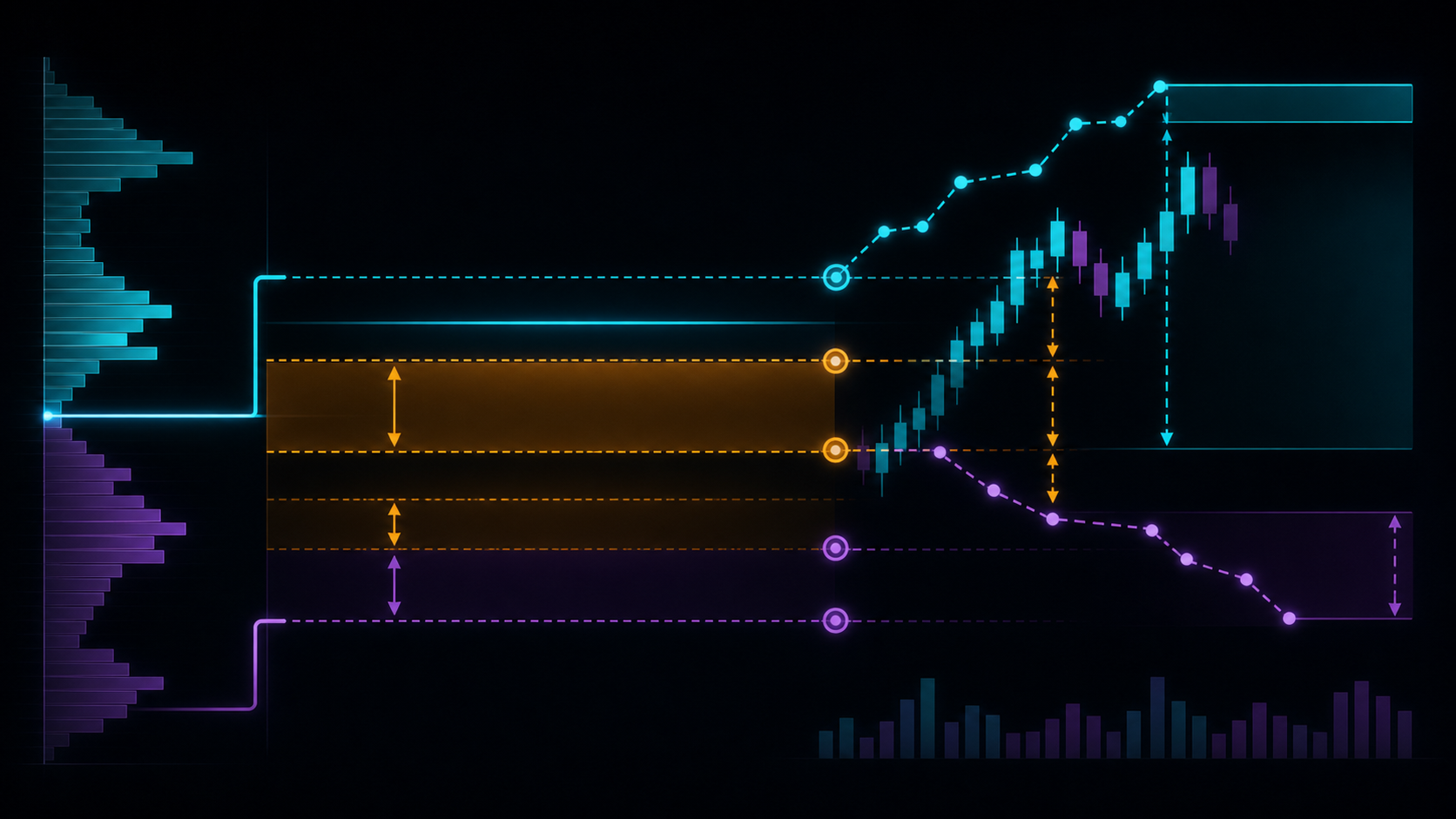
Spread is the gap between the best bid and ask. Slippage is the difference between expected and realized execution. Fees are explicit charges from the venue or broker. All three reduce real performance.
The Bid-Ask Spread
The bid is the highest available buying price. The ask is the lowest available selling price.
The spread is the gap between them.
Crossing the spread creates an immediate execution cost. A trader who buys at the ask and immediately sells at the bid loses approximately the spread before fees.
Spreads often widen when:
- liquidity falls;
- volatility rises;
- news is released;
- the market closes or transitions between sessions;
- the instrument is rarely traded.
What Is Slippage?
Slippage occurs when the realized execution differs from the expected price.
Common causes:
- the order is large relative to available liquidity;
- price moves while the order reaches the venue;
- a stop triggers during rapid movement;
- the order book contains gaps;
- multiple traders compete for the same liquidity.
Slippage can be favorable or unfavorable, but risk planning should assume it can be worse than expected.
Maker and Taker Fees
Many venues distinguish:
- maker orders: add resting liquidity;
- taker orders: consume resting liquidity.
Fee schedules differ by venue, product, volume tier, and order behavior. A limit order is not always a maker order; if it executes immediately, it may be charged as taker.
Other Trading Costs
Depending on the market, costs may include:
- commissions;
- exchange and clearing fees;
- borrowing costs;
- perpetual funding;
- futures roll costs;
- currency conversion;
- data or platform fees;
- withdrawal and custody fees.
Small recurring costs can materially change high-frequency strategies.
Why Costs Change Strategy Quality
Suppose a setup targets a small price move. If spread, fees, and slippage consume a large portion of that move, the strategy may look profitable on a clean chart and fail in execution.
Costs matter especially for:
- scalping;
- frequent strategy switching;
- low-liquidity markets;
- large positions;
- market-order-heavy execution;
- strategies with small average winners.
Calculate Net, Not Gross, Results
A realistic review should track:
net result = gross PnL - fees - funding - borrowing - slippage
Also compare expected entry and exit prices with actual fills. This reveals whether poor results came from the strategy, execution, or both.
Reduce Avoidable Costs
- Trade liquid instruments.
- Avoid unnecessary order frequency.
- Match order type to execution priority.
- Measure actual slippage.
- Understand the fee schedule.
- Avoid holding perpetuals through expensive funding without a reason.
- Account for spread before planning reward-to-risk.
Key Takeaways
- Spread is an implicit cost paid when crossing bid and ask.
- Slippage is the difference between expected and realized execution.
- Fees and funding reduce gross PnL.
- Small-edge and high-frequency strategies are especially cost-sensitive.
- Evaluate strategies using net results and actual fills.
Continue Learning
- Learn liquidity.
- Review trading order types.
- Explore Sessions to understand changing activity.
Actual execution costs can exceed historical estimates during volatility, thin liquidity, outages, and market gaps.