Long and Short Positions Explained
A long position benefits when price rises. A short position benefits when price falls. Both are ways to express a directional market view.
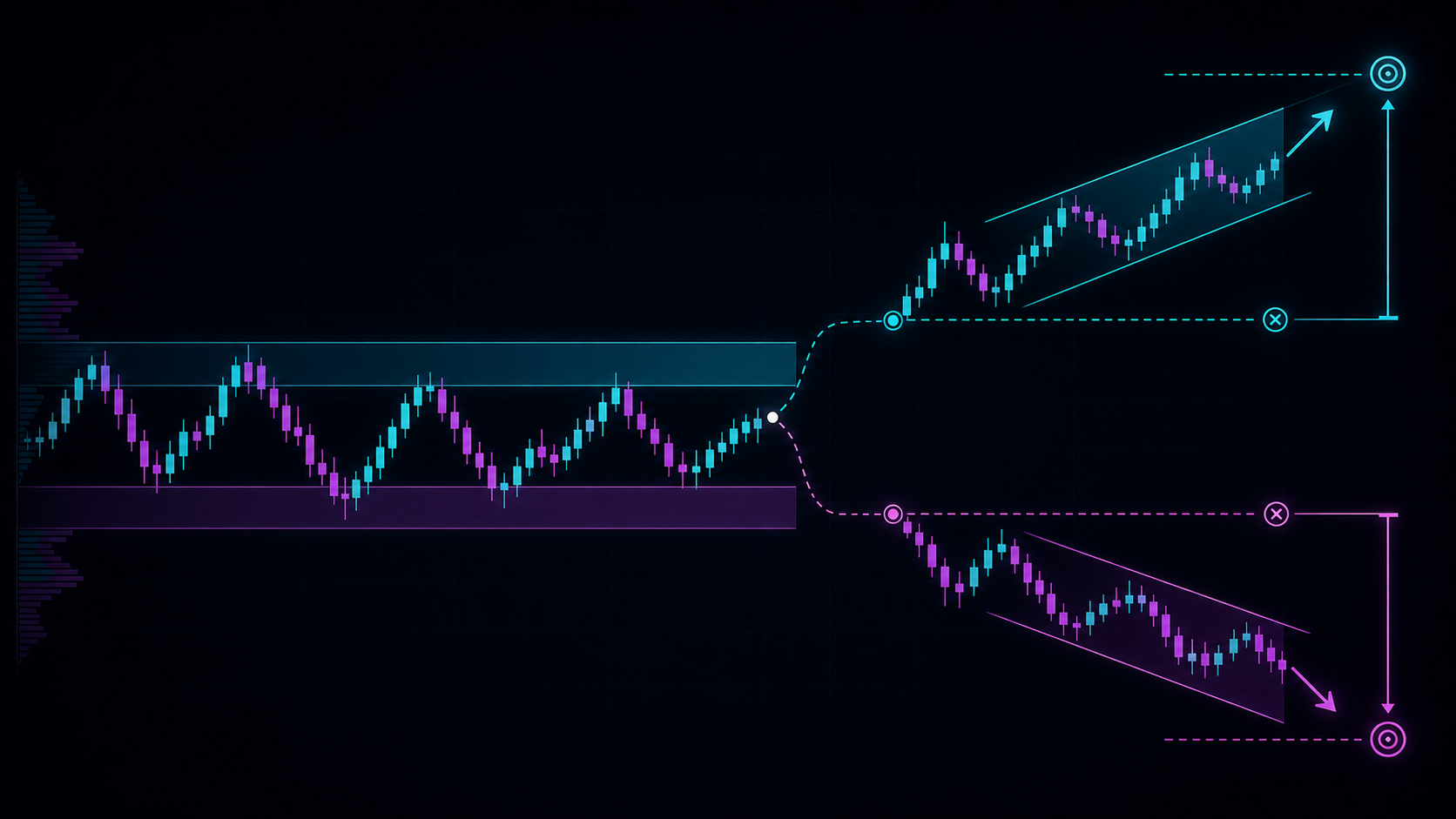
Going long means buying or gaining positive price exposure. Going short means borrowing and selling an asset, or using a derivative that gains when price falls. Both require an entry, invalidation, exit, and defined risk.
How a Long Position Works
A long trader expects price to rise.
In spot markets, the trader generally buys and owns the asset. In derivatives, the trader opens a contract with positive exposure.
Gross long PnL approximately improves as:
exit price - entry price
An unleveraged spot long is generally limited to the capital invested, although custody and venue risks remain.
How a Short Position Works
A short trader expects price to fall.
Short exposure may be created by:
- borrowing an asset, selling it, and later buying it back;
- selling a futures or perpetual contract;
- using another derivative with negative exposure.
Gross short PnL approximately improves as:
entry price - exit price
The exact mechanics, borrow costs, funding, and loss limits depend on the product.
Long and Short Risk Is Not Perfectly Symmetrical
For a simple spot long, price cannot fall below zero. For an uncovered short, price can theoretically rise without a fixed upper limit.
Short positions can also face:
- borrow availability and recall;
- borrow fees;
- negative funding or carry;
- short squeezes;
- rapid losses during upside gaps.
Derivatives venues may liquidate both long and short positions.
Closing vs Reversing
Closing a long means selling the existing exposure. Closing a short means buying back or offsetting the short exposure.
Closing is not the same as reversing. A reversal requires closing the current position and opening a new position in the opposite direction.
Understand how your platform handles reduce-only orders so an intended exit does not accidentally create a new position.
Plan Both Directions the Same Way
Every directional trade needs:
- a market condition that supports the direction;
- a specific setup;
- an actual entry;
- a structural invalidation;
- a position size based on risk;
- a realistic exit plan.
Avenger provides trend context for both bullish and bearish conditions. Indicator signals should support analysis, not replace the plan.
Common Misunderstandings
- “Selling means shorting.” Selling can simply close a long.
- “A bearish signal means short immediately.” Context and setup still matter.
- “Shorting causes markets to fall unfairly.” Shorts also provide liquidity and can hedge risk.
- “Long positions are always safer.” Leverage and oversizing can make either direction dangerous.
Key Takeaways
- Long positions benefit from rising price; shorts benefit from falling price.
- Short mechanics depend on borrowing or derivatives.
- Closing a position is different from reversing it.
- Long and short risks are not perfectly symmetrical.
- Both directions require the same disciplined planning process.
Continue Learning
- Learn why traders should learn to short.
- Study trend trading.
- Review order types.
Short positions can lose rapidly during sharp rallies and may have theoretically unlimited loss potential in some products.