Forward Testing and Paper Trading
Forward testing means applying a strategy to new, unfolding market data. Paper trading means doing it without real capital.
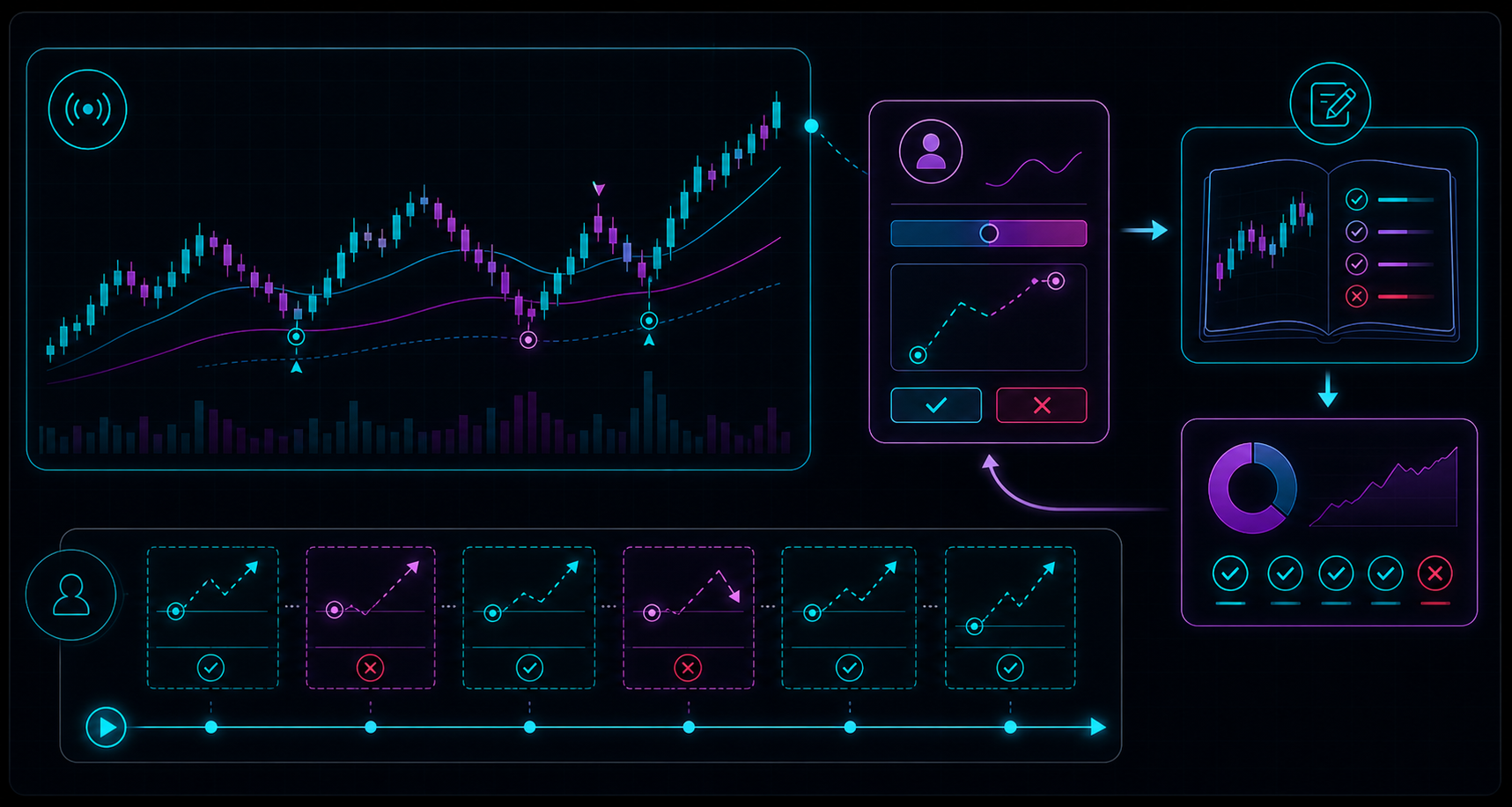
Backtesting asks whether the rules made sense historically. Forward testing asks whether you can recognize and execute those rules in real time.
Why Forward Testing Matters
Historical charts are calm. Live charts are not.
Forward testing reveals:
- hesitation;
- missed entries;
- late entries;
- rule confusion;
- emotional discomfort;
- alert quality;
- whether the strategy appears often enough.
It tests the trader and the process, not only the chart pattern.
Paper Trading Is Not Perfect
Paper trading removes financial pressure. That makes it safer, but less emotional than real trading.
Still, it is valuable because it lets you practice:
- following rules;
- logging decisions;
- respecting invalidation;
- waiting for setups;
- reviewing outcomes.
The Trial Mindset
Use the 7-day ZenAlgo trial to evaluate process fit, not to chase a miracle week.
Ask:
- Can I read the tools clearly?
- Do the indicators support my rules?
- Do I know when not to trade?
- Can I journal the same setup consistently?
- Does this workflow reduce mistakes?
When to Add Small Real Risk
Only consider small real risk after:
- rules are written;
- paper trades are logged;
- the strategy has a meaningful sample;
- rule adherence is stable;
- risk per trade is small enough to survive mistakes.
Using ZenAlgo
Use Engine alerts and readiness to practice waiting. Use Five Elements for confluence review. Use Grid and ABC to keep entries and targets consistent.
Continue Learning
- Study sample size and expectancy.
- Create a pre-trade checklist.
- Review best charting platforms.
Paper trading does not replicate live fills, slippage, stress, or real loss aversion. Transition slowly and with controlled risk.