Volatility Expansion and Compression
Volatility compression occurs when price movement narrows. Expansion occurs when movement widens and price travels faster.
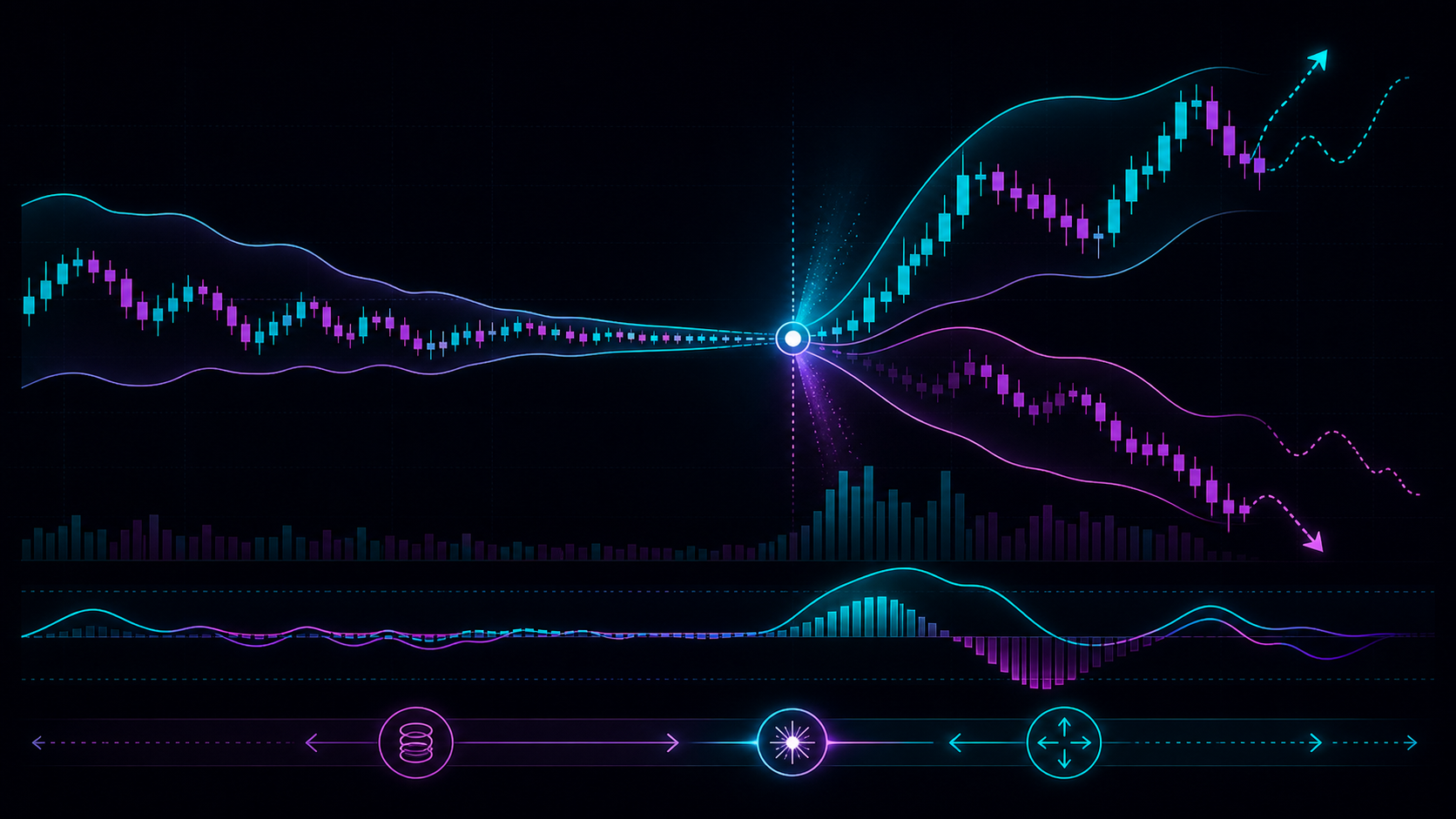
Compression often signals that energy is building, but not which direction it will release. Expansion shows that movement is increasing. Good traders prepare during compression and wait for evidence of direction, acceptance, and risk.
Compression is the market getting quieter. Candles shrink. Ranges narrow. Price overlaps. Breakouts fail quickly. Traders who need action often get impatient here because nothing feels decisive.
But compression can be useful. It tells you where attention may be building. The job is not to predict the release too early. The job is to prepare.
Compression Is Preparation
During compression, mark the boundaries. Identify the level that would matter if price breaks. Check where invalidation could sit. Decide whether the setup would be breakout, failed breakout, or no trade.
Compression is not an entry by itself. A market can stay compressed longer than expected, and it can release in either direction.
Expansion Is Movement and Risk
Expansion happens when movement widens. Candles become larger, ranges expand, volume may increase, and price travels faster.
This can create opportunity, but it also changes execution. Stops may need more room. Slippage may increase. Leverage becomes more dangerous. Emotions rise because the market feels urgent.
The trader who prepared during compression is less likely to chase during expansion.
Direction Is Not Known in Advance
A squeeze can release upward or downward. Traders often make the mistake of deciding the direction before the market confirms it.
Wait for evidence: a break from a meaningful area, a close outside compression, a retest or acceptance, momentum agreement, and enough space before the next obstacle.
False expansion is common. Price may break out, attract late traders, and then return inside the range. This is why breakouts and failed breakouts belong in the same study path.
Using Squeeze Context
Squeeze helps monitor pressure, basis, delta, and multi-horizon alignment. Read it as context for compression and release, not as an automatic breakout command.
Sessions can add timing context because expansion often appears around active opens, overlaps, or news windows.
Continue Learning
- Study breakouts and failed breakouts.
- Review trading sessions.
- Explore Squeeze.
- Practice breakout setup workflows.
Volatility expansion can increase both opportunity and loss speed. Stops may slip and position size must account for changing conditions.