How Price, Volume, Delta, and Open Interest Work Together
No single metric explains the whole market. Price, volume, delta, and open interest each answer a different question.
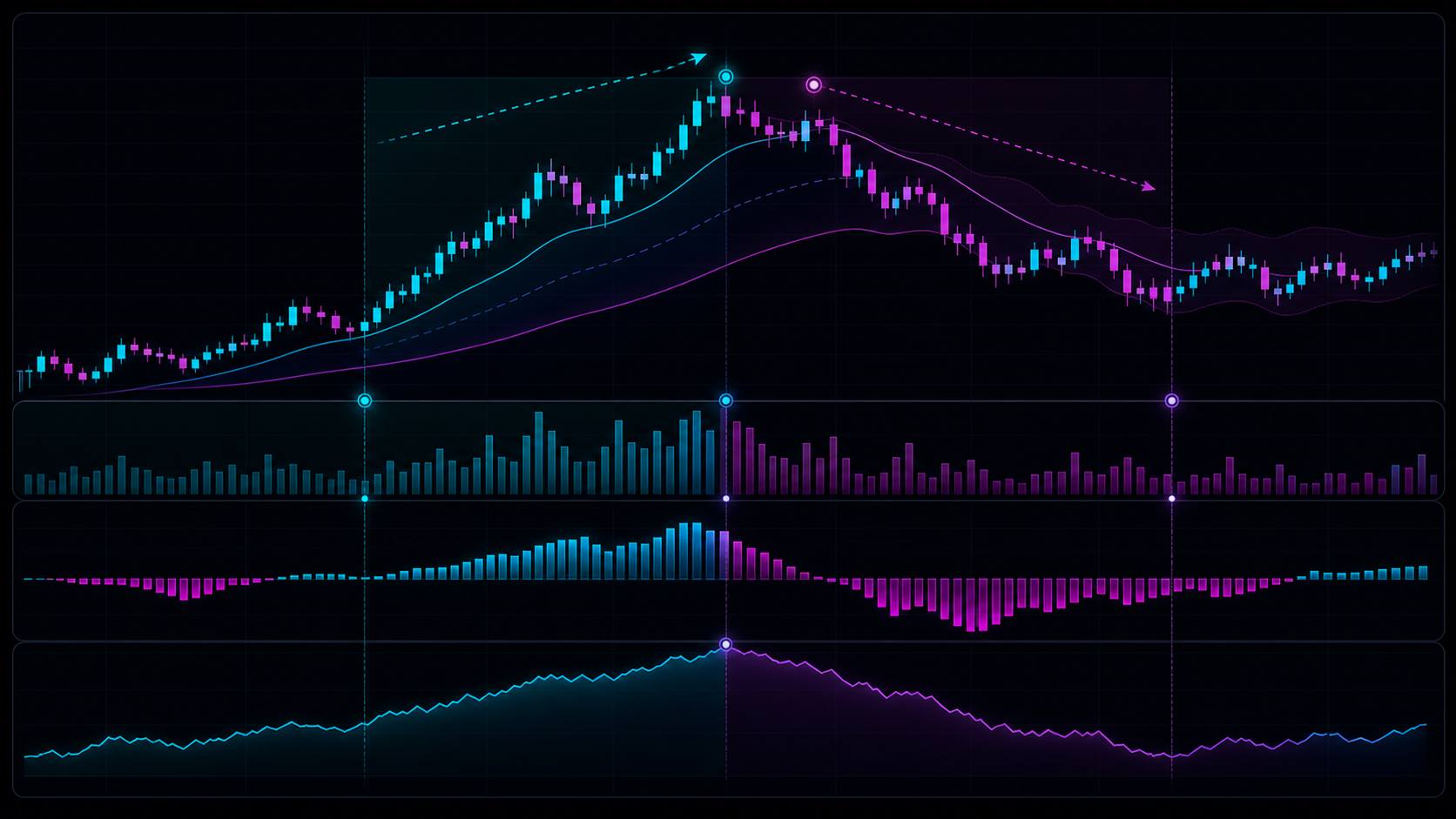
Strong context appears when several independent readings agree. Caution increases when price, participation, pressure, and positioning tell different stories.
The Four Questions
| Tool | Question it answers |
|---|---|
| Price | What did the market accept or reject? |
| Volume | How much activity supported the move? |
| Delta | Which side appeared more aggressive? |
| Open interest | Was exposure added or removed? |
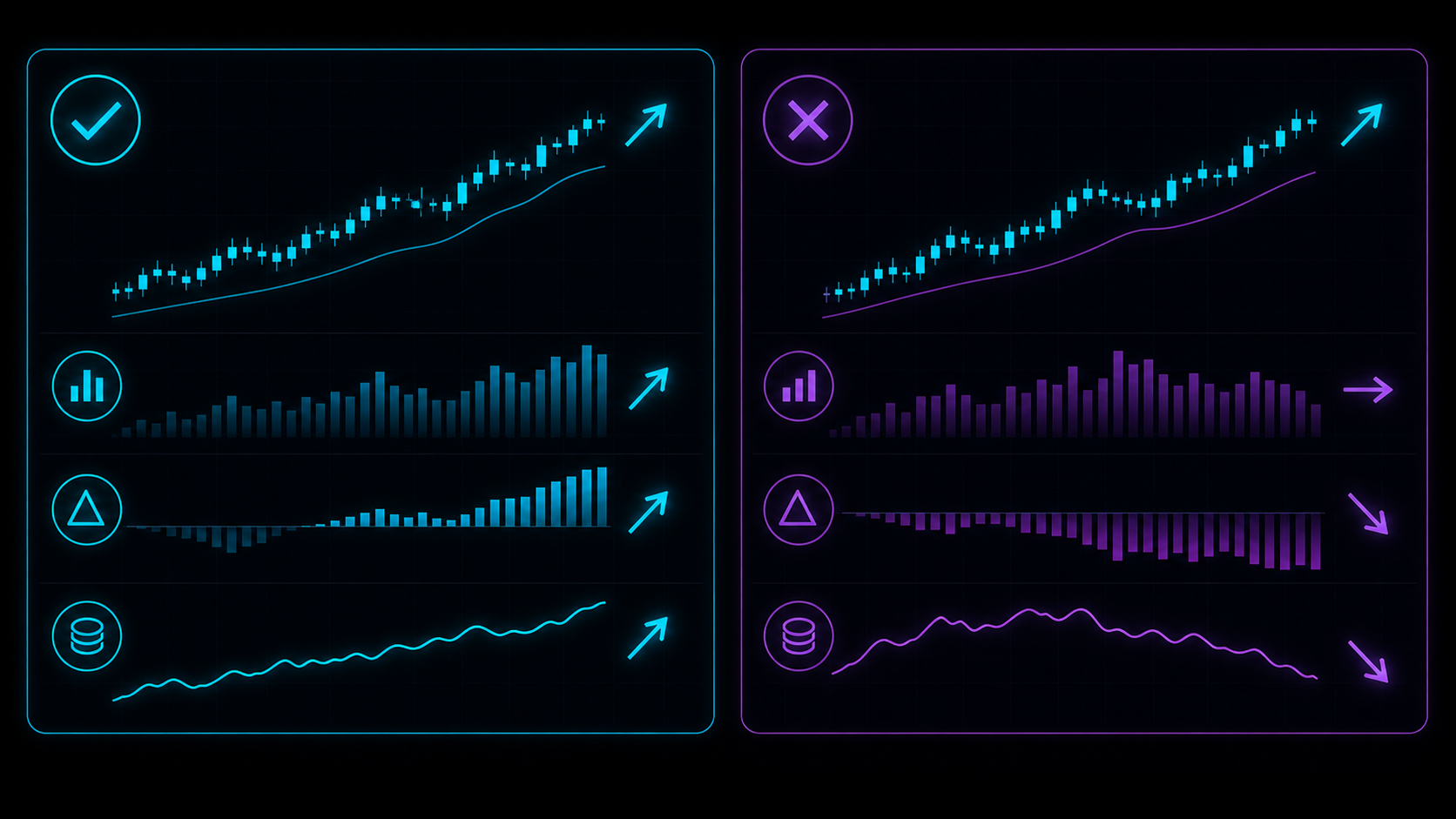
You do not need all four to agree on every trade. But when they conflict, the setup deserves more caution.
Clean Confirmation
A bullish continuation has stronger context when:
- price is making higher highs and higher lows;
- volume expands on pushes and calms on pullbacks;
- delta is positive during the impulse;
- open interest rises as price rises;
- the move is not far beyond value.
A bearish continuation is the mirror image: lower structure, stronger selling participation, rising OI during the decline, and limited distance from value.
Mixed Signals
Mixed signals are common.
Examples:
- price breaks out, but volume is weak;
- price rises, but delta is negative;
- price trends higher, but open interest falls;
- volume spikes, but price cannot move through resistance.
Mixed signals do not always mean avoid. They mean the trade needs stricter confirmation and smaller assumptions.
Location Still Matters
Order-flow readings are strongest when they appear at meaningful locations:
- support or resistance;
- VWAP or anchored VWAP;
- POC, VAH, or VAL;
- fair value gaps;
- order blocks;
- prior breakout or breakdown levels.
A positive delta spike at resistance means something different from a positive delta spike after reclaiming value.
Using ZenAlgo
Five Elements is designed for this kind of multi-factor reading. It combines delta, stablecoin conditions, basis, open interest, volume, and VWAP context into one panel.
Advanced Open Interest focuses on the price/OI/delta relationship, while Heavy Delta adds order-flow context directly to the chart.
A Simple Decision Flow
- Start with price structure.
- Check whether volume is normal, low, or expanding.
- Ask whether delta agrees with the candle direction.
- Check whether OI suggests new exposure or closing exposure.
- Compare the reading with value location.
- Decide whether the trade deserves full risk, reduced risk, or no trade.
Continue Learning
- Study absorption and exhaustion.
- Learn VWAP.
- Explore Five Elements.
More confirmation does not mean no risk. Strongly aligned readings can still fail during news, liquidation cascades, and sudden liquidity changes.