Order Blocks Explained
Order blocks are price areas where strong buying or selling activity may have started a meaningful move.
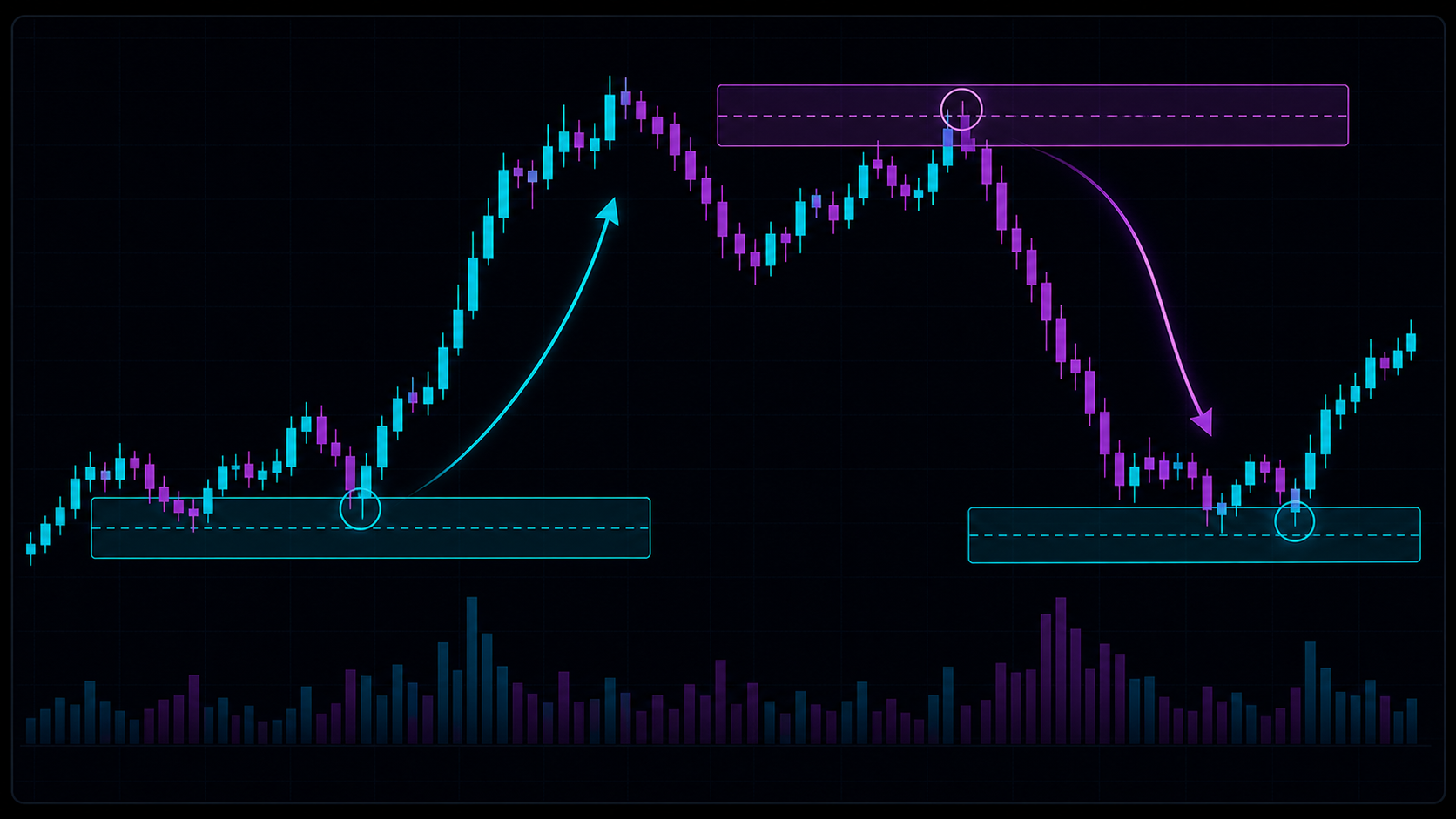
An order block is an area of interest. It suggests where a large move may have originated, but it does not guarantee that price will reverse when it returns.
The Core Idea
Traders mark order blocks because they want to identify zones where strong participants may have acted.
A bullish order block is often associated with the last down candle or consolidation before a strong upward move.
A bearish order block is often associated with the last up candle or consolidation before a strong downward move.
Why Price May React
Price may react at an order block because:
- unfilled orders may remain nearby;
- prior participants may defend the area;
- trapped traders may exit;
- the zone overlaps with value, VWAP, or support/resistance;
- other traders are watching the same level.
The reaction is possible, not guaranteed.
Stronger Order Block Context
An order block usually deserves more attention when it:
- starts a clear displacement move;
- breaks market structure;
- forms with unusual volume or delta;
- aligns with higher-timeframe trend;
- overlaps with VWAP, volume profile, or a fair value gap;
- has not been repeatedly tested.
Order Blocks and Absorption
When price returns to an order block, watch the reaction.
If aggressive selling enters a bullish block but price refuses to move lower, buyers may be absorbing. If aggressive buying enters a bearish block but price cannot move higher, sellers may be absorbing.
This is where delta and volume become useful.
Using ZenAlgo
Heavy Delta includes order-block boxes and related reaction symbols. Its broader table also helps compare order-block reactions with trend, value, delta, and signal context.
Use volume profile, VWAP, and market structure to judge whether an order block is located in a place that actually matters.
Practical Checklist
- Did the block start a meaningful move?
- Did it break structure or create displacement?
- Is it fresh or already used?
- Does it align with higher-timeframe context?
- Is reaction supported by delta or volume?
- Where is the idea invalidated?
Continue Learning
- Study fair value gaps.
- Learn absorption and exhaustion.
- Explore Heavy Delta order blocks.
Order blocks are subjective zones. They can fail, be front-run, or become irrelevant when market context changes.