Fair Value Gaps Explained
A fair value gap, often shortened to FVG, is an area where price moved so quickly that little two-sided trading occurred.
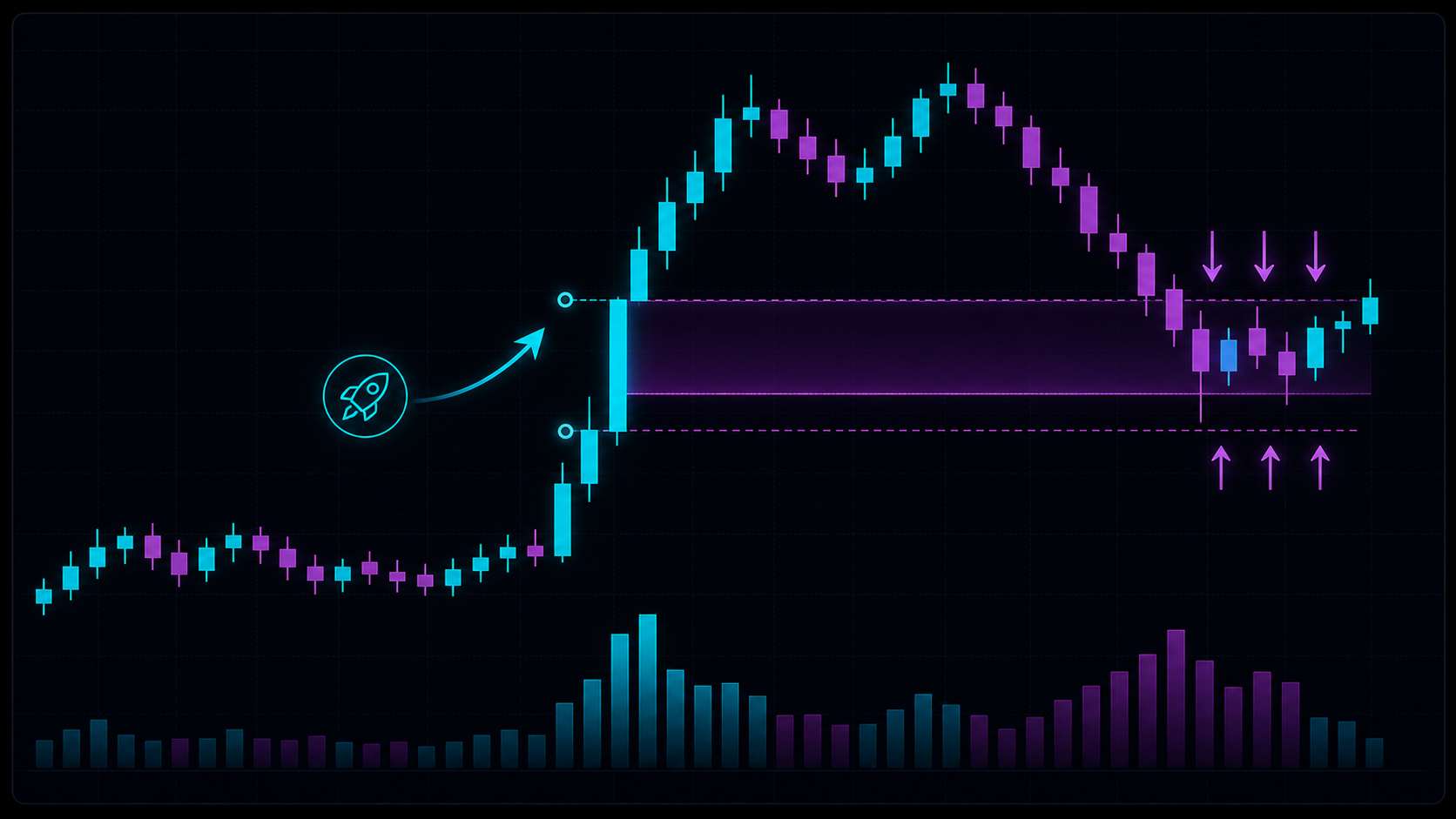
Fair value gaps highlight imbalance. They are areas where price may later react, rebalance, or continue through with strength.
The Basic Pattern
The common three-candle idea is simple:
- price starts moving;
- a strong impulse candle creates separation;
- the next candle does not fully overlap the first candle's range.
The unfilled area between the first and third candle is treated as an imbalance zone.
Why FVGs Matter
FVGs matter because fast movement often leaves unfinished business.
Price may later:
- return to the gap and react;
- partially fill the gap;
- fully rebalance the gap;
- ignore the gap in a strong trend;
- use the gap as continuation support or resistance.
Not Every Gap Is Useful
Weak FVGs appear everywhere on lower timeframes. Stronger ones usually have better context:
- created by a clean impulse;
- near a breakout, reversal, or order block;
- aligned with trend;
- supported by volume or delta;
- not already fully mitigated;
- located near a meaningful value area.
Using FVGs Without Overtrading
Treat an FVG as an area of interest, not an order.
Before trading around one, ask:
- What caused the imbalance?
- Is the broader trend aligned?
- Is the gap fresh or already used?
- Is price reacting with confirmation?
- Where is invalidation?
Using ZenAlgo
Avenger highlights Fair Value Gaps directly on the chart and combines them with AVG, EMA structure, and Daily VWAP. That helps prevent a common mistake: trading every gap without asking whether price is near value or aligned with trend.
Heavy Delta can add order-flow and structure context when evaluating whether an imbalance reaction has participation behind it.
Continue Learning
- Study order blocks.
- Learn absorption and exhaustion.
- Explore Avenger.
Fair value gaps can remain unfilled, fill partially, or fail immediately. Never assume every gap must be filled on your trading timeframe.