How to Confirm a Divergence
Confirming a divergence means waiting for evidence that the warning is actually affecting price.
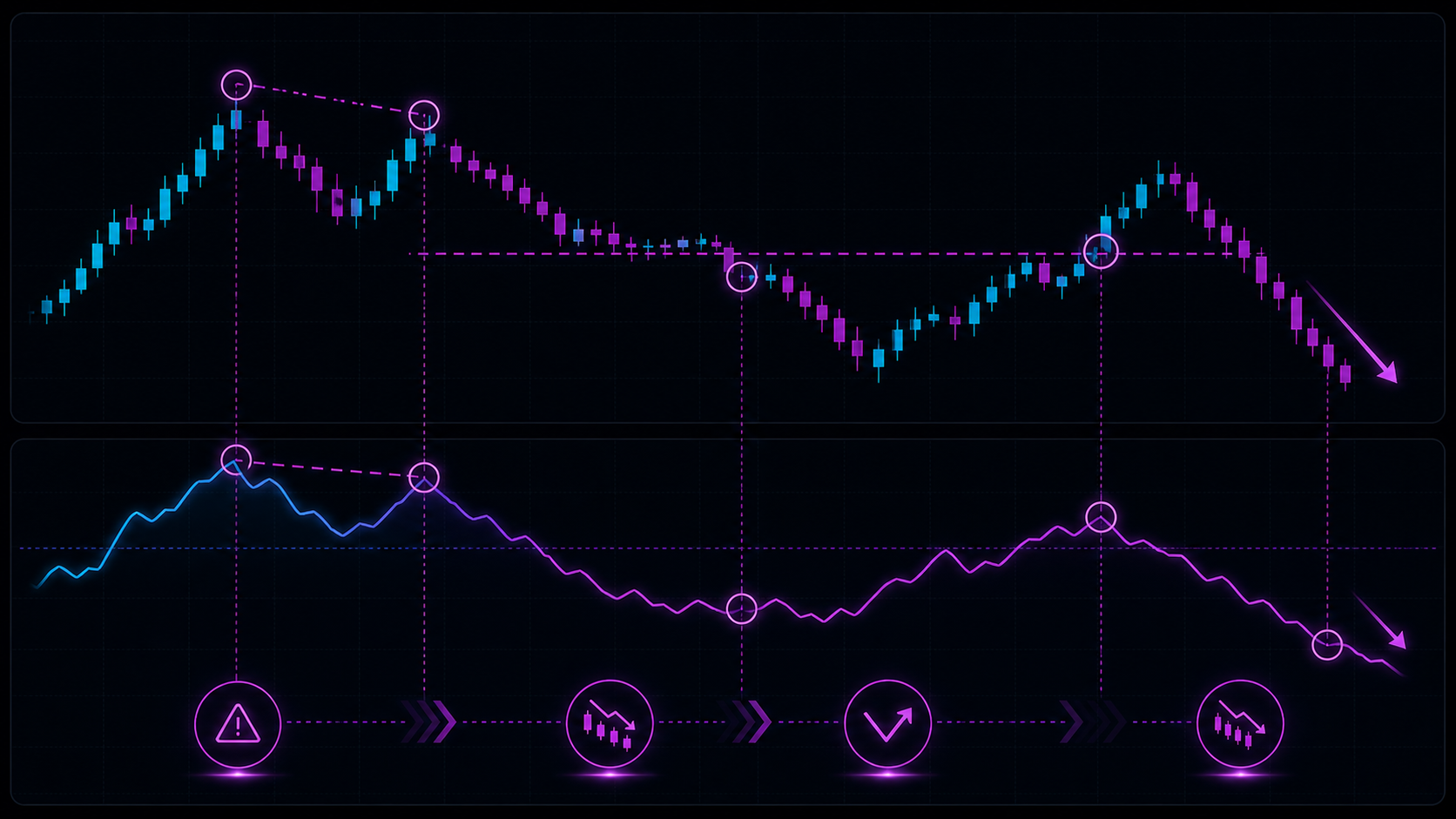
Do not trade the divergence label. Trade the moment when price, location, and participation begin to confirm the warning.
Confirmation Layer 1: Location
A divergence at a meaningful level is more useful than one in empty space.
Look for:
- support or resistance;
- VWAP or anchored VWAP;
- volume profile levels;
- order blocks;
- fair value gaps;
- higher-timeframe zones.
Confirmation Layer 2: Price Structure
Price should show that behavior is changing.
Examples:
- failed breakout or failed breakdown;
- break of a minor trendline;
- reclaim of a prior level;
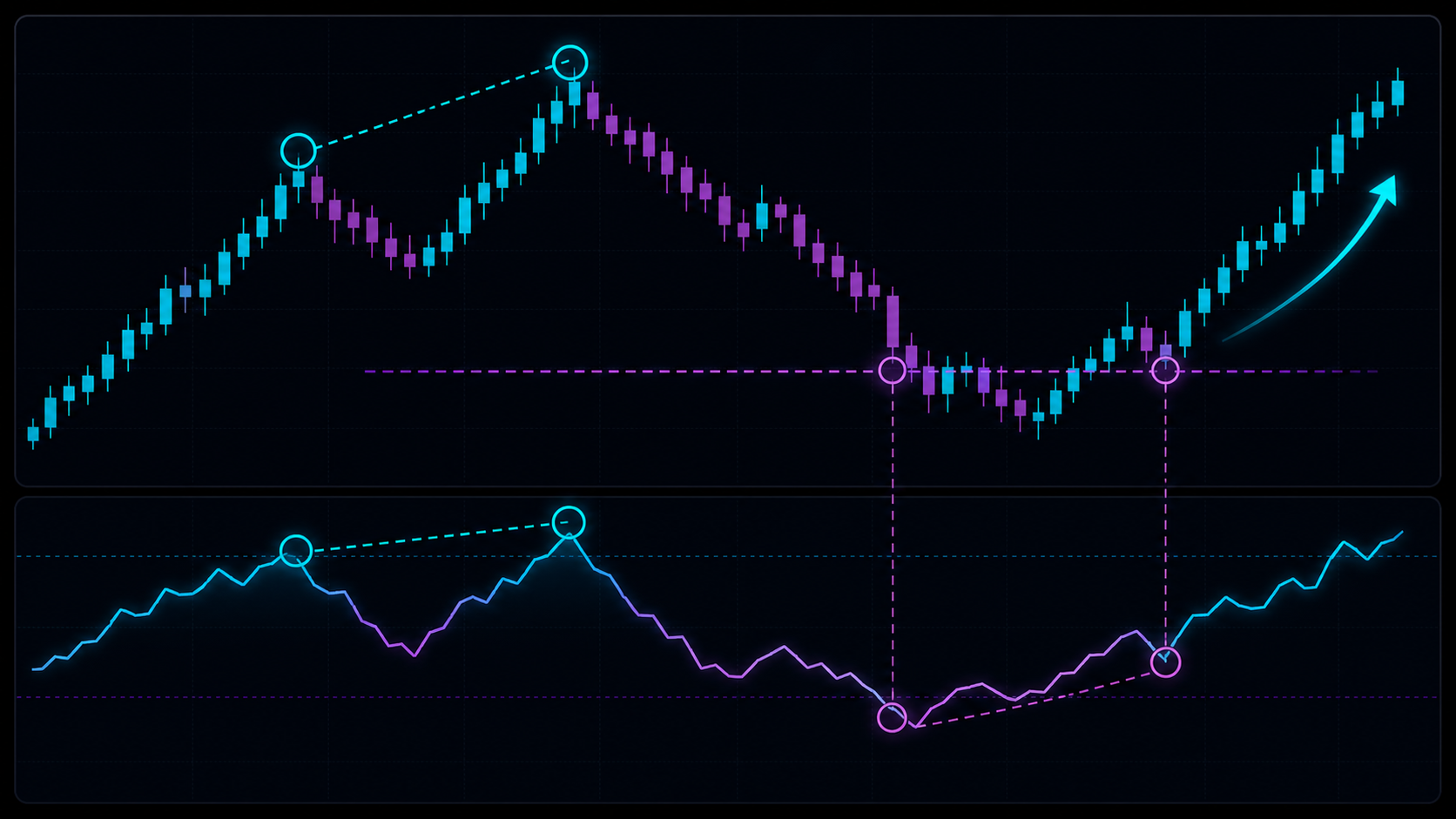
- higher low after bullish divergence;
- lower high after bearish divergence;
- retest that holds.
Confirmation Layer 3: Participation
Participation should begin to support the idea.
For bullish divergence, you may want to see:
- sellers stop making progress;
- delta improve;
- volume appear on the reclaim;
- open interest stop supporting downside.
For bearish divergence, you may want to see:
- buyers stop making progress;
- delta weaken;
- rejection volume;
- open interest stop supporting upside.
Using ZenAlgo
Waves can identify the initial divergence. Delta can check participation disagreement. Avenger can help decide whether the trade fights or aligns with trend and value.
For broader readiness, use Five Elements or Engine to check whether several conditions align.
A Simple Confirmation Sequence
- Find the divergence.
- Check whether it is at a meaningful level.
- Wait for price to stop making progress.
- Wait for structure to shift or reclaim.
- Check volume, delta, or confluence.
- Define invalidation before entry.
Continue Learning
- Study why divergences fail.
- Learn confluence in trading.
- Review price action confirmation.
Confirmation reduces false signals but can also arrive late. Do not increase position size just because you waited longer.