Confluence in Trading
Confluence means several independent pieces of evidence support the same trade idea.
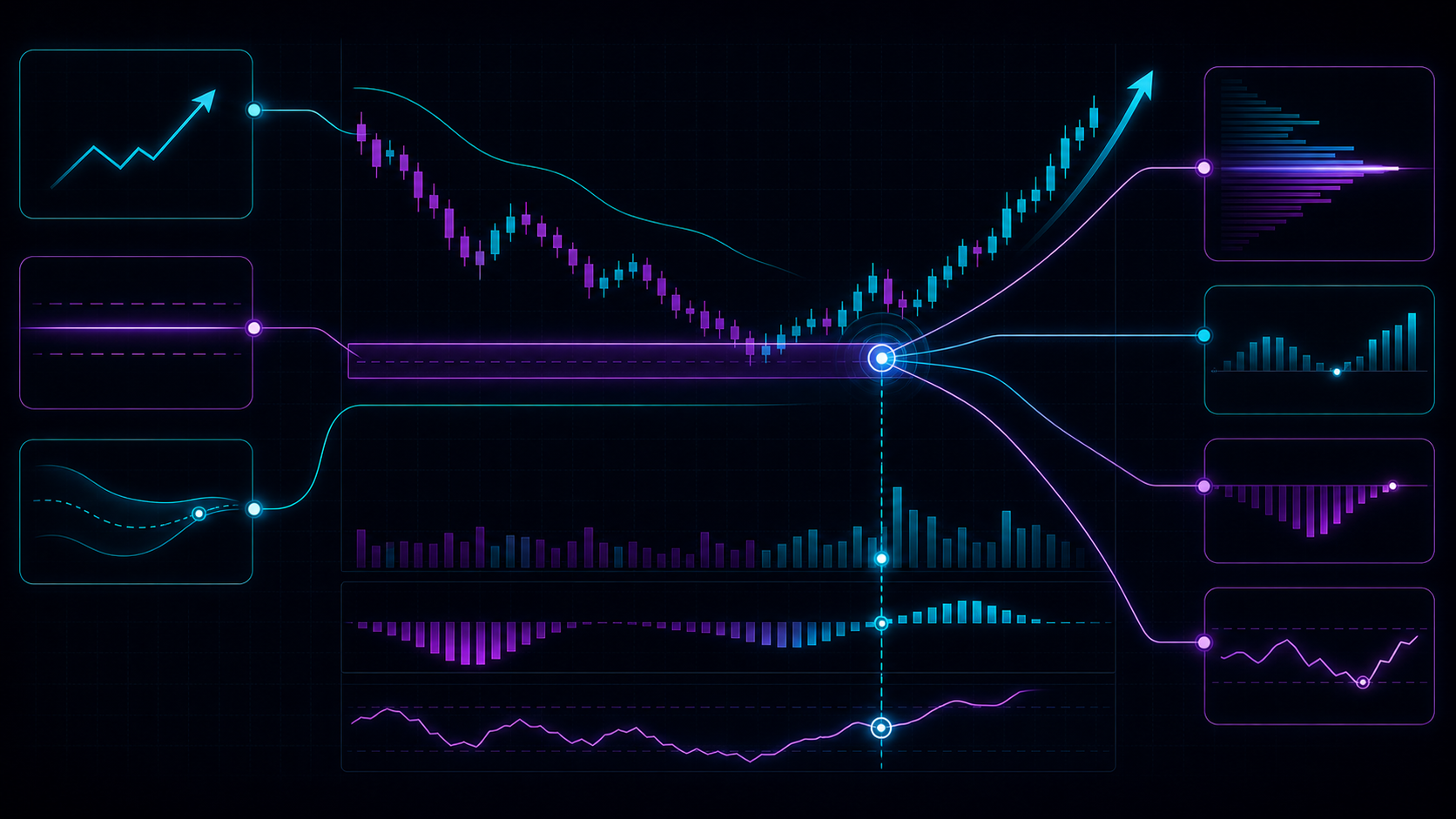
Good confluence is not many indicators saying the same thing. Good confluence is different types of evidence pointing toward the same plan.
What Counts as Independent Evidence?
Useful confluence can come from:
- price structure;
- trend direction;
- momentum;
- volume;
- delta;
- open interest;
- VWAP or value;
- higher-timeframe context;
- session timing;
- risk-to-reward.
The strongest setups often combine several of these without becoming messy.
Redundant Confluence
Redundant confluence happens when multiple tools measure almost the same thing.
For example, three RSI-like oscillators all showing overbought conditions may feel convincing, but they may only be repeating one idea: momentum is stretched.
That is not the same as having trend, value, delta, volume, and structure align.
A Practical Confluence Stack
Try this order:
- market regime;
- trend direction;
- key level or value location;
- trigger or signal;
- participation confirmation;
- risk and target quality.
This order prevents signal chasing. A signal becomes interesting only after the environment and location make sense.
Using ZenAlgo
Five Elements is designed for multi-factor confirmation across delta, stablecoin conditions, basis, open interest, volume, and VWAP context.
Engine helps distinguish continuation, pullback, and contrary setup families. Use it to organize readiness, not to avoid thinking.
Confluence Checklist
- Are my reasons independent?
- Does the market regime support this trade type?
- Is price at a meaningful location?
- Does the signal align with trend or intentionally fade it?
- Does order flow confirm or disagree?
- Is risk-to-reward still acceptable?
Continue Learning
- Learn high-probability setups.
- Study signal vs setup.
- Explore Five Elements.
Confluence can create overconfidence. Multiple reasons do not remove the need for position sizing, invalidation, and loss acceptance.