What Makes a High-Probability Trading Setup?
A high-probability setup is not a setup that cannot lose. It is a setup where the conditions are clear, aligned, and worth the risk.
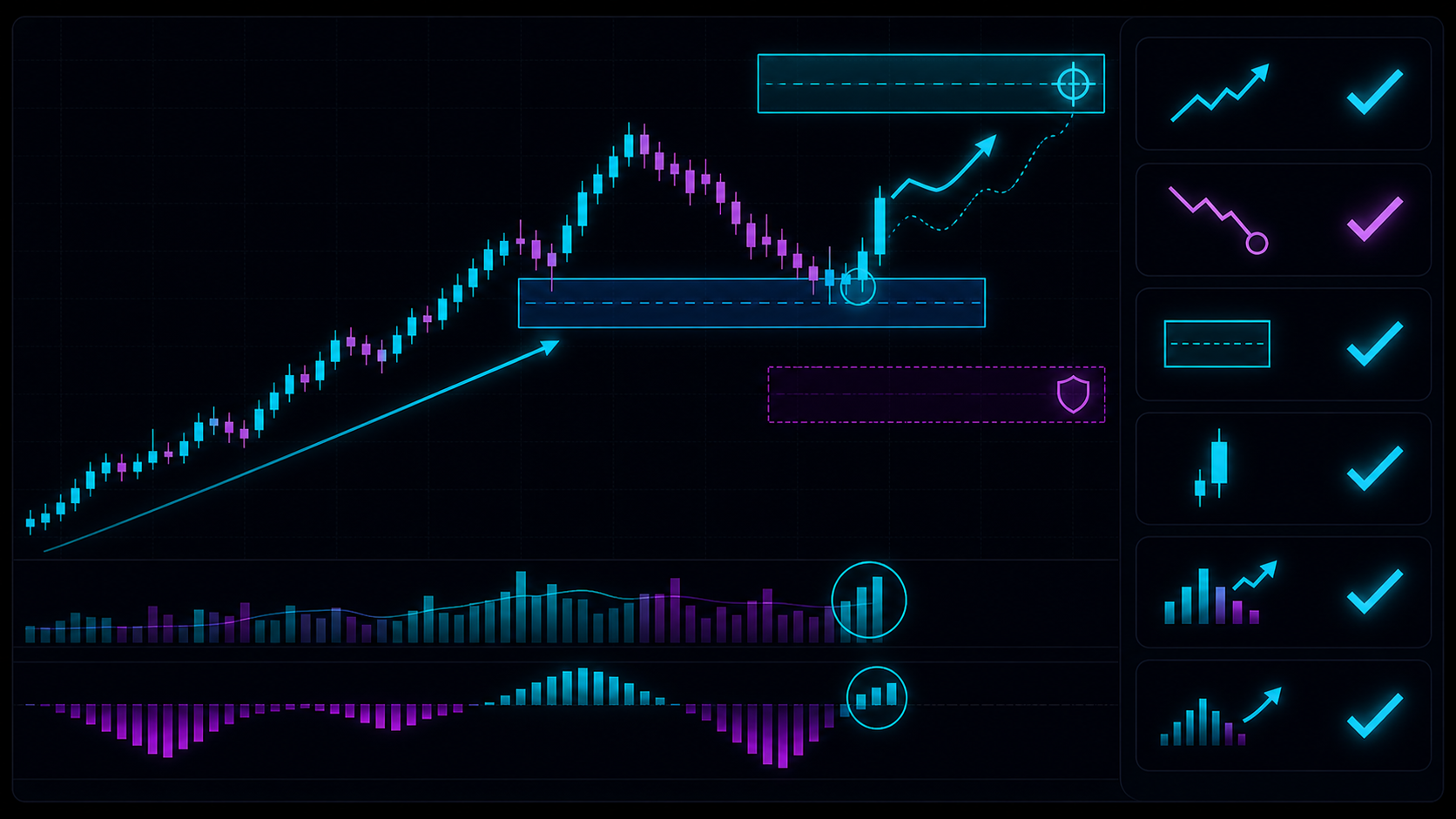
High probability comes from context and quality. A signal in the right environment is different from the same signal in a bad location.
The phrase "high-probability setup" can be misleading. It sounds like certainty. It sounds like the market is about to do what you want.
That is not what it means.
A high-probability setup is simply a trade idea with enough aligned evidence to justify risk. It can still fail. In fact, if you trade long enough, even your best-looking setups will fail sometimes. The value is not certainty. The value is a cleaner decision.
The Difference Between Signal and Setup
A signal is one piece of information. A divergence, a candle, a volume spike, an indicator alert, or a reclaim of a level can all be signals.
A setup is the full situation around the signal. It includes market regime, trend, location, confirmation, invalidation, risk-to-reward, and the trader's ability to execute the plan.
This is why the same signal can be good in one place and weak in another. A bullish signal near value in an uptrend is not the same as a bullish signal directly below major resistance in a choppy range.
Context and Location Come First
Before asking whether the signal is good, ask where it is happening.
Is the market trending, ranging, breaking out, or transitioning? Is price at support, resistance, VWAP, a range boundary, or extended far from value? Is there enough room before the next obstacle? Does the higher timeframe support the idea or fight it?
These questions prevent a trader from treating every signal as equal.
Confirmation Should Clarify, Not Rescue
Confirmation is useful when it supports a trade idea that already has context and location.
It can come from structure shifting, a level being reclaimed or rejected, volume expansion, delta agreement, a divergence resolving, or multi-timeframe alignment. But confirmation cannot rescue a trade that has no clear invalidation or poor location.
More confirmation is not always better. If you add indicators until one agrees with you, you are not building confluence. You are shopping for permission.
Risk Completes the Setup
No setup is complete until risk is defined.
Where is the trade wrong? Is the stop placed around invalidation, not just pain tolerance? Is the reward worth the risk after fees, spread, and realistic execution? Would you still take the trade if the last trade had been a loss?
This final question connects setup quality to psychology. A setup is not high quality if it requires emotional improvisation to manage.
Using ZenAlgo
Five Elements and Engine help evaluate readiness and confluence. Avenger helps with trend and value context, while Waves or Delta can provide momentum or participation confirmation.
Use these tools to make the setup more reviewable. If a condition matters before entry, it should also be visible later in your trading journal.
Continue Learning
- Study confluence.
- Learn signal vs setup.
- Review risk-to-reward.
- Practice planning entry, stop, and targets.
High-probability does not mean high certainty. A trader can do everything correctly and still take a loss.